
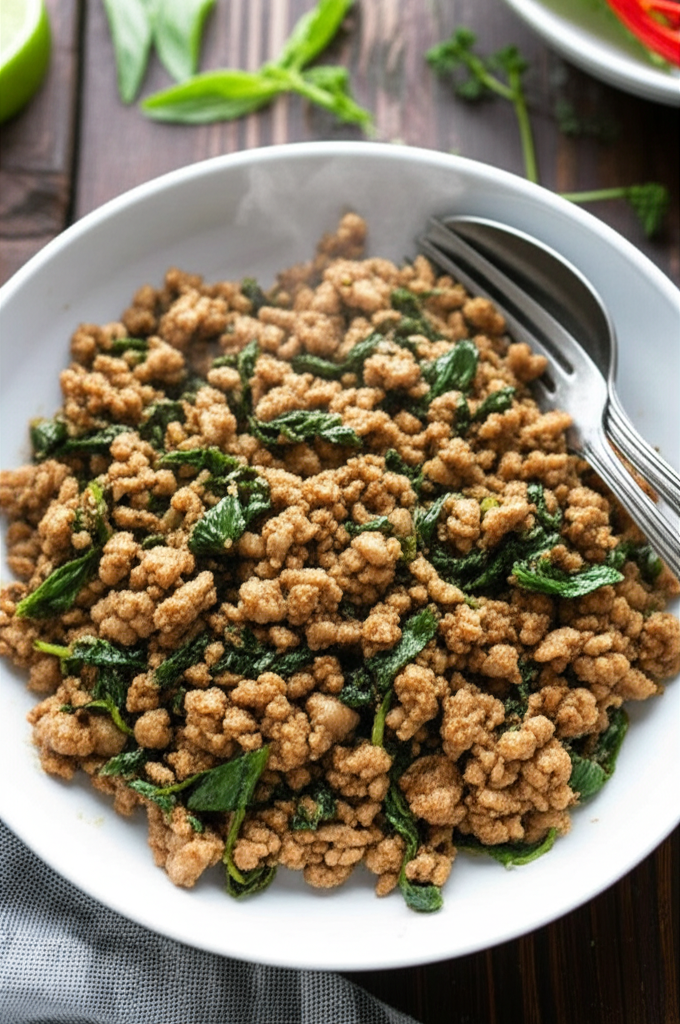
✨ The 15-Minute Culinary Escape: My Ode to Authentic Thai Basil Chicken (Pad Krapow Gai)
There are dishes that merely feed us, and then there are dishes that transport us. For me, Pad Krapow Gai is a vessel to another time and place. I close my eyes, and I am no longer in my polished kitchen, but standing on a bustling soi in Bangkok. The air is thick with the sweet perfume of jasmine rice, the sharp tang of lime, and the humid, electric energy of the city. I can hear the staccato clang of a steel spatula against a seasoned, concave wok, a rhythm that is the very heartbeat of Thai street food. A vendor, with decades of mastery in their hands, orchestrates a culinary ballet over a roaring flame. A plume of fragrant steam erupts, carrying the unmistakable, peppery aroma of holy basil. This, my friends, is not just cooking; it is alchemy. Pad Krapow Gai, in its purest form, is a lesson in beautiful simplicity and profound flavor. It is a fiery, savory, and deeply aromatic stir-fry that harmonizes the holy trinity of Thai cooking: spicy, sweet, and salty. It’s the kind of meal you crave after a long day—a swift, restorative escape that awakens the senses and soothes the soul. The experience is a crescendo of textures and tastes: the tender, caramelized ground chicken, the intense heat of the chilies tempered by the fragrant basil, and the glorious, unctuous river of a runny egg yolk that flows over a bed of fluffy jasmine rice. It is lightning in a pan, a wellness-forward masterpiece that proves a truly remarkable meal doesn’t require hours of labor, only intention and respect for the ingredients.
🛒 Ingredients
- 1 lb (450g) boneless, skinless chicken thighs, finely minced by hand or ground
- 4-6 cloves of garlic, peeled
- 3-8 Thai bird’s eye chilies (adjust to your heat preference)
- 2 tablespoons avocado oil or other high-heat neutral oil
- 1 tablespoon premium oyster sauce
- 1.5 tablespoons high-quality Thai fish sauce (nam pla)
- 1 tablespoon low-sodium tamari or high-quality soy sauce
- 1 teaspoon coconut sugar or palm sugar
- 1/4 cup low-sodium chicken or vegetable broth
- 2 generous cups of fresh holy basil leaves, loosely packed
- 4 large pasture-raised eggs (for topping, optional but highly recommended)
- Steamed jasmine or brown rice, for serving
- Sliced cucumber and lime wedges, for garnish
A Note on Key Ingredients:
- Holy Basil (Krapow): This is the soul of the dish and what gives it its name. It is not the same as Thai sweet basil or Italian basil. Holy basil has a unique, peppery, clove-like, and slightly spicy aroma that is absolutely essential for authentic flavor. Its leaves are typically smaller with serrated edges. If you cannot find it, Thai sweet basil is a distant second, but the dish will be different. Seeking out holy basil at an Asian market is a worthy quest. Beyond its flavor, it is revered in Ayurvedic traditions as an adaptogen, helping the body manage stress.
- Fish Sauce (Nam Pla): Do not be intimidated by its pungent aroma. A high-quality fish sauce is the liquid gold of Southeast Asian cuisine, providing an unparalleled depth of savory, umami flavor that salt alone cannot replicate. It is made from fermented anchovies and salt, and it adds a complex, foundational savoriness that is the signature of Thai cooking. Invest in a good brand like Red Boat or Megachef; the difference is night and day.
- Chicken Thighs: While chicken breast works, I implore you to use thighs. Their higher fat content ensures the chicken remains succulent and tender, even when cooked over the ferocious heat of a wok. For the ultimate texture, purchase whole thighs and mince them by hand with a sharp knife. This creates a more varied, rustic texture compared to the uniform, often pasty consistency of pre-ground chicken.
Gourmet & Wellness-Focused Swaps:
- For a Gluten-Free dish: Ensure you are using a gluten-free tamari and a gluten-free oyster sauce.
- For a Soy-Free dish: Substitute coconut aminos for the tamari/soy sauce.
- For a Plant-Based version: Finely chopped firm tofu or crumbled tempeh are excellent protein substitutes. Use a vegan “oyster” sauce made from mushrooms.
- For added texture and nutrients: Add a handful of chopped long beans or sliced bell peppers along with the chicken.
👨🍳 Instructions
-
Step 1: The Art of the Mise en Place
In the world of high-heat, rapid-fire cooking, preparation is paramount. A well-organized station is the first secret to a flawless stir-fry. Begin by preparing your aromatics. In a stone mortar and pestle, pound the garlic and Thai chilies together into a coarse, fragrant paste. This traditional method ruptures the cell walls, releasing more essential oils than simple chopping. If you don’t have one, finely mince them together. Next, in a small bowl, whisk together the oyster sauce, fish sauce, tamari, and coconut sugar. Have this sauce, your broth, and your packed basil leaves all within arm’s reach of your stove. If mincing the chicken by hand, do this now. This entire process should feel like a graceful meditation before the storm of the wok. -
Step 2: Mastering the Wok and the Aromatics
Place a large wok or a heavy-bottomed skillet over high heat. Let it get screamingly hot; you should see faint wisps of smoke rise from the surface. This intense heat is non-negotiable; it is what creates the coveted ‘wok hei’ or “breath of the wok,” a smoky essence that defines a great stir-fry. Add the avocado oil and swirl to coat. Immediately add the garlic-chili paste. Stir-fry vigorously for just 15-20 seconds until it becomes intoxicatingly fragrant. Do not let it burn, as scorched garlic will impart a bitter taste. This brief, intense moment is where you bloom the foundational flavors of the dish. -
Step 3: The Perfect Sear and Caramelization
Add the minced chicken to the wok. Break it up with your spatula, spreading it into a relatively thin layer. Now, resist the urge to stir constantly. Let the chicken sit undisturbed for 30-45 seconds to make direct contact with the hot metal. This allows for the Maillard reaction to occur, developing a beautiful golden-brown, caramelized crust on the chicken, which adds immense flavor and texture. Once browned on one side, begin to stir-fry, breaking up any large clumps, until the chicken is almost cooked through, about 2-3 minutes. -
Step 4: Building the Sauce and the Final Toss
Pour the prepared sauce mixture around the edges of the wok, not directly onto the chicken. This allows the sugars in the sauce to hit the hottest part of the pan and caramelize for a moment, deepening the flavor profile before you toss everything together. Stir everything to coat the chicken evenly. If the pan looks a bit dry, pour in the chicken broth to deglaze, scraping up any delicious browned bits (the *fond*) from the bottom of the pan. Let the sauce bubble and reduce slightly, clinging to the chicken beautifully. -
Step 5: The Basil’s Grand Finale and Plating
Turn off the heat entirely. This is a critical step. Add the entire bunch of holy basil leaves to the wok. The residual heat is more than enough to wilt them perfectly. Gently toss for about 15 seconds until the leaves are just wilted but still vibrant green. Overcooking the basil will destroy its delicate, peppery aroma. While the chicken cooks, fry your eggs in a separate pan to your desired doneness—a crispy-edged, runny-yolked “kai dao” is traditional and divine. To serve, mound a portion of jasmine rice onto a plate. Spoon the Pad Krapow Gai alongside it. Gently place the fried egg on top. Garnish with cool, crisp cucumber slices and a wedge of lime. The magic moment is breaking the yolk and letting it cascade over the fiery chicken and rice, creating its own rich, creamy sauce.
🧪 Nutritional Analysis
(Approximate values per serving, assuming the recipe makes 3 servings, without rice and egg)
- Calories: 350-400 kcal
- Protein: 35g
- Fat: 20g
- Carbohydrates: 6g
- Fiber: 1g
- Sugar: 3g
- Sodium: 800mg (Can be reduced by using low-sodium sauces)
- Dietary Profile: This dish is inherently low-carb. It can easily be made gluten-free by using tamari and gluten-free oyster sauce. For a paleo or whole30 approach, swap tamari for coconut aminos and omit the sugar.
💚 Health Benefits
- Lean Protein Powerhouse: Chicken is an excellent source of high-quality lean protein, essential for muscle repair, metabolic function, and maintaining satiety, which helps in weight management.
- Adaptogenic Stress Support: Holy basil is a celebrated adaptogen. Studies suggest it can help the body adapt to stress, lower cortisol levels, and promote mental clarity and calm.
- Metabolism & Mood Boost: The capsaicin in Thai chilies has been shown to provide a temporary boost to metabolism. It also triggers the release of endorphins, creating a feeling of mild euphoria and well-being.
- Immune System Ally: Garlic contains allicin, a potent compound known for its antibacterial, antiviral, and immune-supporting properties. Regular consumption can help fortify your body’s natural defenses.
- Anti-Inflammatory Properties: Both garlic and holy basil possess powerful anti-inflammatory compounds that can help combat chronic inflammation in the body, a root cause of many modern ailments.
- Rich in B Vitamins: Chicken thighs are a notable source of B vitamins like niacin and B6, which are crucial for converting food into energy, supporting brain function, and forming red blood cells.
🌟 Final Thoughts from Chef Adam Jorive
In our relentless pursuit of wellness, we sometimes forget that joy is a vital nutrient. Pad Krapow Gai is a testament to the belief that healthy eating should never be a compromise on flavor or pleasure. It is a dance of fire and fragrance, a dish that energizes the body and excites the palate in equal measure. I encourage you to view this recipe not as a rigid set of rules, but as a blueprint for your own culinary creativity. Don’t be afraid to adjust the heat, to swap in shrimp or mushrooms, or to add more greens. The true art of cooking lies in this dialog between the chef and the ingredients. Create a plate that is not only nourishing but also a feast for the eyes—a vibrant canvas of color and texture. Because ultimately, the most profound wellness is found in the moments we create to savor life, one delicious, mindful bite at a time. Cook with passion, eat with joy, and be well.