
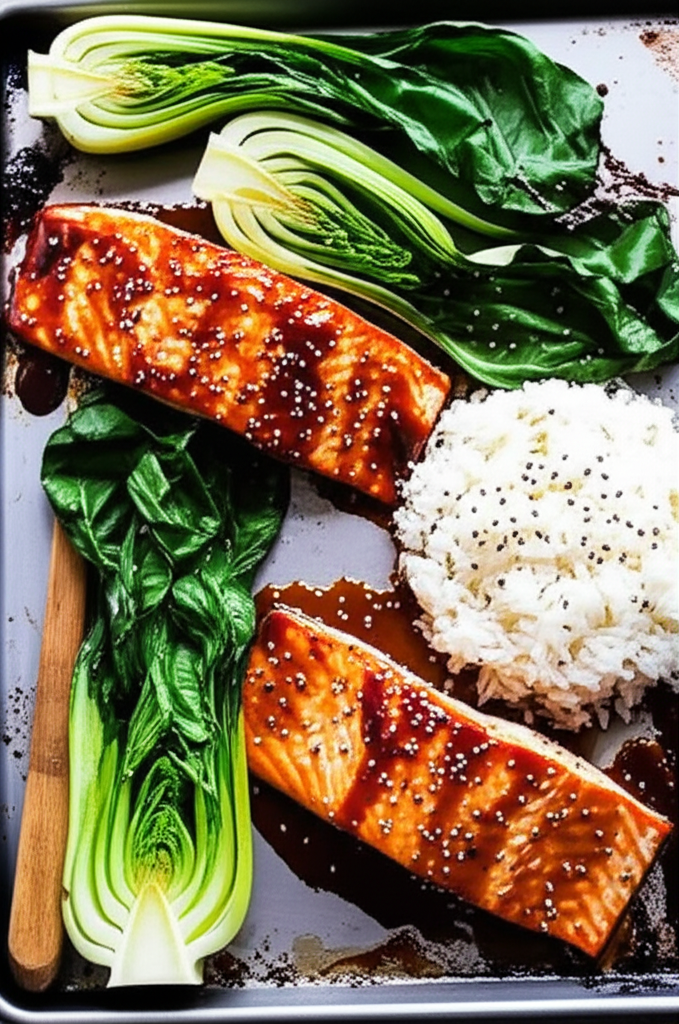
✨ The Art of Wabi-Sabi: A Sheet-Pan Symphony of Miso-Glazed Salmon & Bok Choy
There are moments in a chef’s journey that are not born in the clamor of a bustling, Michelin-starred kitchen, but in the profound silence of a distant place. For me, this dish is a memory of Kyoto, distilled. I recall a crisp autumn morning, walking through the Arashiyama Bamboo Grove, the air tasting of earth and cool mist. Later, in a small, unassuming restaurant overlooking the Hozugawa River, I was served a meal of breathtaking simplicity: perfectly grilled fish with a subtle miso glaze, seasonal greens, and a simple bowl of rice. It wasn’t about complex technique; it was about honoring the integrity of each ingredient. The Japanese call this aesthetic wabi-sabi—finding beauty in imperfection and profundity in nature.
This Sheet-Pan Salmon with Bok Choy is my translation of that memory for the modern, wellness-focused kitchen. It’s a dish that embraces effortless elegance, proving that a deeply nourishing, soul-satisfying meal doesn’t require hours of labor or a mountain of pots and pans. Here, the salmon becomes a lacquered jewel, its rich oils mingling with a glaze that is a perfect trifecta of salty, sweet, and savory umami. The bok choy, kissed by the heat of the oven, offers a delightful duality of texture—its leaves tender and wilted, its stalks retaining a defiant, verdant crunch. The aroma that fills your home as it bakes is a promise of the experience to come: warm, comforting, and utterly restorative. This is more than a recipe; it’s a weeknight meditation, a culinary ritual that nourishes the body and calms the spirit.
🛒 Ingredients
- For the Salmon & Vegetables:
- 4 (6-ounce / 170g) center-cut salmon fillets, skin on or off
- 1.5 lbs (about 680g) baby bok choy, halved lengthwise
- 1 tablespoon extra-virgin olive oil
- 1 tablespoon toasted sesame oil
- 4 cups cooked rice, for serving (sushi rice, jasmine, or brown rice)
- For the Miso-Soy Glaze:
- ¼ cup (60g) white miso paste (Shiro Miso)
- 3 tablespoons mirin (Japanese sweet rice wine)
- 2 tablespoons reduced-sodium soy sauce or tamari for a gluten-free option
- 1 tablespoon rice vinegar
- 1 tablespoon freshly grated ginger (from a 1-inch piece)
- 2 cloves garlic, finely minced or grated
- For Garnish (Optional but Recommended):
- 1 tablespoon toasted white or black sesame seeds
- 2 scallions, thinly sliced on the diagonal
- A pinch of red pepper flakes for a touch of heat
- Gourmet Addition: A few threads of shichimi togarashi (Japanese seven-spice blend) for a complex, aromatic heat.
A Note on Key Ingredients:
- White Miso (Shiro Miso): This is the soul of our glaze. Miso is a traditional Japanese seasoning produced by fermenting soybeans with salt and kōji. White miso is fermented for a shorter period, resulting in a lighter, sweeter, and less salty flavor profile than its red counterpart. It imparts a profound, savory depth—that coveted “umami” quality—which beautifully complements the richness of the salmon. Nutritionally, as a fermented food, it is a source of beneficial probiotics that support gut health.
- Mirin: This is not simply for sweetness. Mirin is a type of rice wine with a lower alcohol content and higher sugar content than sake. It adds a delicate, nuanced sweetness, a beautiful glossy sheen to the glaze, and helps to tenderize the fish. Look for true mirin, not “aji-mirin,” which often contains corn syrup.
- Salmon: We choose center-cut fillets for their uniform thickness, ensuring even cooking. The high content of omega-3 fatty acids in salmon not only provides significant health benefits but also contributes to its luxurious, buttery texture that flakes so beautifully when perfectly cooked. It’s a canvas that eagerly absorbs the flavors of our glaze.
👨🍳 Instructions
-
Step 1: Craft the Umami Elixir & Prepare the Pan
Preheat your oven to 400°F (200°C) with a rack in the center. Line a large, rimmed baking sheet with parchment paper for effortless cleanup. In a small bowl, we will craft the heart of our dish—the glaze. Combine the white miso, mirin, soy sauce (or tamari), rice vinegar, grated ginger, and minced garlic. Whisk vigorously until the miso paste has fully dissolved and the mixture is smooth, homogenous, and has the consistency of thin honey. A small whisk is your best friend here. This step is a lesson in balance; feel free to taste. Does it need a touch more mirin for sweetness or vinegar for brightness? Trust your palate.
-
Step 2: Prepare Your Canvas—The Salmon and Bok Choy
The secret to perfectly cooked salmon, whether pan-seared or roasted, begins with a dry surface. Pat the salmon fillets thoroughly dry with a paper towel. This allows the glaze to adhere properly and the skin to crisp rather than steam. For the bok choy, use a sharp chef’s knife to slice each head in half lengthwise. If you have larger heads, quarter them. In a large mixing bowl, toss the bok choy with the olive oil, sesame oil, and a light pinch of salt and pepper. Use your hands to ensure each leaf and stalk is lightly coated. This small amount of fat is crucial; it encourages caramelization and prevents the leaves from burning before the stalks are cooked.
-
Step 3: The Art of Arrangement
Arrange the salmon fillets, skin-side down, in the center of your prepared baking sheet, leaving a bit of space between each piece. Think of the pan as your canvas. Spoon about two-thirds of the prepared miso glaze over the tops and sides of the salmon fillets, using the back of the spoon to create an even, generous layer. Now, arrange the seasoned bok choy halves around the salmon in a single layer. Try to place them cut-side down on the parchment—this direct contact with the hot pan will yield a beautiful, golden-brown char. A crowded pan is an enemy of texture; it creates steam, so use a second sheet pan if necessary. Give your ingredients room to roast.
-
Step 4: The Alchemy of Heat
Place the baking sheet in the preheated oven. Roast for 12–15 minutes. The timing is a guide, not a rule. Your eyes and a fork are the best judges. The salmon is done when it is opaque and flakes easily with gentle pressure from a fork. For a richer color, you can switch the oven to the broil setting for the final 1-2 minutes, watching it like a hawk to prevent the glaze from burning. The bok choy leaves should be tender and slightly crisped at the edges, while the white stalks should be tender-crisp—yielding to a fork but still with a subtle bite. The kitchen will be filled with an intoxicating aroma; this is the signal that your masterpiece is nearing completion.
-
Step 5: The Final Presentation—A Feast for the Eyes
To serve, create a bed of warm, fluffy rice in a shallow bowl or on a plate. Carefully place a fillet of the glistening salmon alongside a few halves of the roasted bok choy. The pan juices are liquid gold—do not discard them! Drizzle any remaining glaze and the flavorful juices from the pan over the salmon and rice. Garnish generously with the toasted sesame seeds for a nutty crunch and the fresh, sharp bite of sliced scallions. A final dusting of shichimi togarashi or red pepper flakes will awaken the palate. Present it immediately. This dish is a celebration of the present moment.
🧪 Nutritional Analysis
(Approximate values per serving, assuming a 6-ounce salmon fillet and 1 cup of cooked brown rice)
- Calories: 620 kcal
- Protein: 45g
- Carbohydrates: 50g
- Fat: 26g (primarily heart-healthy unsaturated fats)
- Fiber: 6g
- Sugar: 9g
- Sodium: 650mg (can be reduced by using less soy sauce/miso)
- Dietary Profile: This recipe is pescatarian and dairy-free. It can easily be made gluten-free by substituting tamari for soy sauce.
💚 Health Benefits
- Rich in Omega-3 Fatty Acids: Salmon is a powerhouse of EPA and DHA, omega-3s renowned for supporting brain function, reducing inflammation throughout the body, and promoting cardiovascular health.
- Cruciferous Vegetable Power: Bok choy is a member of the cruciferous family, packed with vitamins A, C, and K, as well as antioxidants like glucosinolates, which have been studied for their role in cellular protection.
- Supports Digestive Wellness: The white miso in the glaze is a fermented food, providing probiotics that contribute to a healthy gut microbiome, which is essential for proper digestion and immune function.
- Sustained Energy Release: Choosing brown rice as a base provides complex carbohydrates and fiber, ensuring a slower, more stable release of energy compared to refined grains, keeping you feeling full and focused.
- Immune System Support: The combination of garlic and ginger offers potent anti-inflammatory and antimicrobial properties, providing a natural boost to your immune system.
- Complete Protein Source: Salmon provides high-quality, complete protein, which is vital for building and repairing tissues, maintaining muscle mass, and producing essential enzymes and hormones.
🌟 Final Thoughts from Chef Adam Jorive
In the world of fine dining, we often chase complexity. We deconstruct, we foam, we sphere. Yet, some of the most profound culinary truths lie in simplicity. This sheet-pan meal is a testament to that philosophy. It is proof that you can create something beautiful, deeply flavorful, and genuinely good for you without unnecessary stress or complication. It embodies the harmonious balance I strive for in my own life and cooking: the intersection of pleasure, wellness, and artistry.
I encourage you to view this recipe as a template, a starting point for your own creativity. Perhaps you’ll swap the bok choy for tenderstem broccoli or asparagus spears in the spring. Maybe you’ll trade the salmon for cod, or even firm tofu for a plant-based interpretation. Add a whisper of chili oil to the glaze if you crave more heat. The kitchen should be your sanctuary and your playground. Cook with intuition, eat with mindfulness, and remember that the most nourishing ingredient of all is the joy you find in the process.
Your writing carries the intimacy of a whispered observation. It feels personal, yet universal, inviting the reader to explore their own inner reflections alongside the text.