
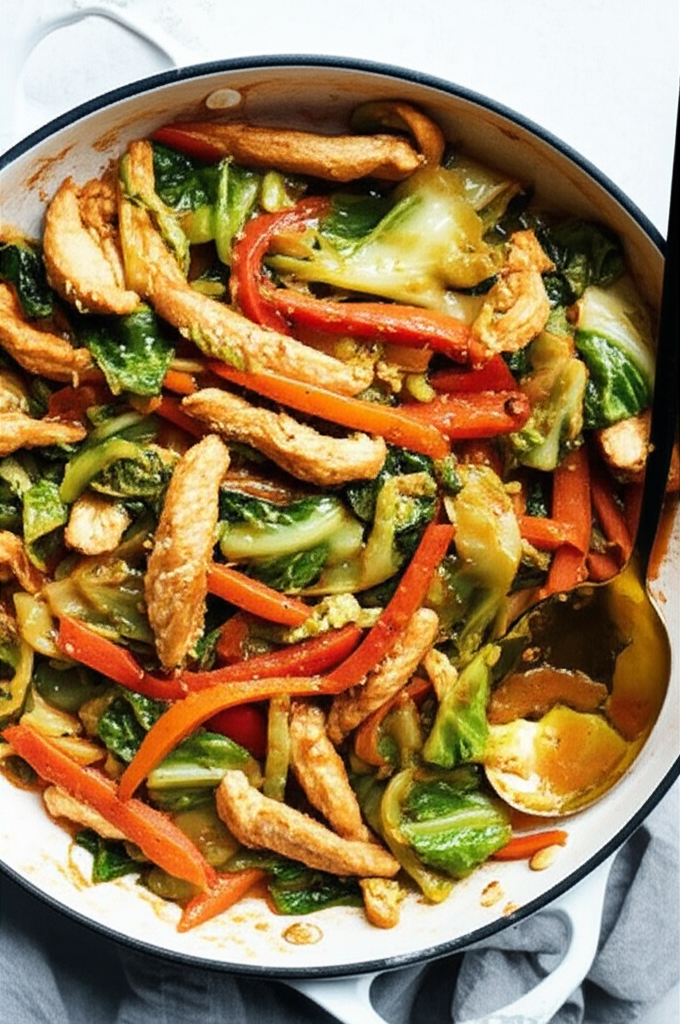
✨ Spicy Chicken & Cabbage Stir-Fry: A Symphony of Fire and Grace for the Modern Palate
There are dishes that we cook, and then there are dishes that compose us. They rearrange our senses and bring a quiet, centered clarity to a hurried day. This Spicy Chicken & Cabbage Stir-Fry is, for me, one of the latter. Its story begins not in a grand, Michelin-starred kitchen, but on a misty evening in a small village nestled in the hills of Northern Thailand. I was there not as a chef, but as a student of flavor, observing a grandmother tend to her cast-iron wok over an open flame. With graceful, practiced movements, she transformed the humblest of ingredients—a head of cabbage, a handful of chicken, a few fiery chilies—into a meal that was at once explosive and comforting. It was a lesson in the power of simplicity, heat, and respect for the ingredient.
This recipe is my homage to that memory, adapted for the modern, wellness-focused kitchen. It’s a culinary dialogue between textures: the tender, yielding chicken, seared to a delicate gold, whispers against the crisp, vibrant cabbage that crackles with life. The flavor profile is a carefully orchestrated crescendo. It begins with the deep, umami foundation of tamari and the nutty whisper of toasted sesame, builds with the pungent warmth of ginger and garlic, and culminates in a clean, bright wave of chili heat from sambal oelek that awakens the palate without overwhelming it. This is not a dish to be rushed. It is designed to be enjoyed slowly, perhaps with a bowl of fragrant jasmine rice or hearty quinoa, allowing you to savor each distinct note. It is nourishment for the body, yes, but also a balm for the soul—a fiery, beautiful reminder that health and indulgence can, and should, dance together on the same plate.
🛒 Ingredients
- For the Chicken & Marinade:
- 1 lb (450g) boneless, skinless chicken breasts or thighs, preferably organic and free-range, sliced into thin ¼-inch strips
- 1 tablespoon tamari or coconut aminos
- 1 teaspoon arrowroot starch or cornstarch
- ½ teaspoon toasted sesame oil
- For the Stir-Fry Sauce:
- 3 tablespoons tamari or coconut aminos
- 1 tablespoon rice vinegar
- 1 tablespoon raw honey or pure maple syrup
- 1-2 tablespoons sambal oelek (adjust to your heat preference)
- 1 teaspoon toasted sesame oil
- For the Stir-Fry:
- 1 tablespoon avocado oil or coconut oil
- 1 medium head of Savoy or Napa cabbage (about 6-8 cups), cored and thinly sliced
- 1 red bell pepper, thinly sliced into julienne strips
- 4 cloves garlic, finely minced
- 1-inch piece of fresh ginger, peeled and finely minced
- 4 scallions, thinly sliced, separating white/light green parts from dark green tops
- For Garnish (Optional but Recommended):
- Toasted white or black sesame seeds
- Fresh cilantro or Thai basil leaves
- Lime wedges for serving
Chef’s Notes on Key Ingredients:
- Savoy Cabbage: While any cabbage will do in a pinch, Savoy is the star here for a reason. Its beautifully crinkled, tender leaves cook quickly, becoming sweet and succulent while retaining a delightful, delicate texture. Unlike standard green cabbage, it won’t release excess water and turn your stir-fry into a soup, ensuring a perfectly seared result.
- Sambal Oelek: This Indonesian chili paste is my secret weapon for clean, vibrant heat. It’s made primarily from crushed raw red chilies, with a little vinegar and salt. It lacks the intense sweetness of sriracha or the fermented funk of gochujang, allowing it to provide a pure, bright spiciness that complements, rather than masks, the other ingredients.
- Tamari: An essential element for depth and umami. Tamari is a Japanese form of soy sauce, traditionally made with little to no wheat. It’s darker, richer, and less salty than its Chinese counterpart, offering a more complex, savory flavor. Using tamari also makes this entire dish beautifully gluten-free. For a soy-free alternative, coconut aminos work wonderfully, offering a slightly sweeter profile.
👨🍳 Instructions
-
Step 1: The Art of Preparation (Mise en Place)
In the world of high-heat cooking, preparation isn’t just a step; it’s the foundation of success. Begin by patting your chicken completely dry with paper towels; moisture is the enemy of a good sear. Slice it thinly, about ¼-inch thick, against the grain. This technique severs the muscle fibers, guaranteeing exceptionally tender results. In a medium bowl, combine the sliced chicken with 1 tablespoon of tamari, the arrowroot starch, and ½ teaspoon of sesame oil. The starch creates a velveteen coating that protects the chicken from overcooking and helps thicken our final sauce. Set it aside to marinate for at least 15 minutes at room temperature. While the chicken absorbs its flavor, meticulously prepare your vegetables. Slice your cabbage, julienne the bell pepper, mince the garlic and ginger, and slice your scallions, keeping the green tops separate. In a small bowl, whisk together all the sauce ingredients until the honey or maple syrup is fully dissolved. Your station should be an orchestra of ingredients, ready for the conductor’s cue.
-
Step 2: Mastering the Sear
The success of any stir-fry hinges on heat management. Place a large wok or a heavy-bottomed skillet over high heat. Let it get screaming hot—you should see faint wisps of smoke rising from the surface. Add the avocado oil and swirl to coat. Carefully place the marinated chicken into the wok in a single, even layer. Do not overcrowd the pan; cook in two batches if necessary. The goal is to sear, not steam. Let the chicken cook undisturbed for 60-90 seconds until a beautiful golden-brown crust forms. Then, toss and cook for another 1-2 minutes until just cooked through. The interior should still be juicy. Immediately remove the chicken from the wok and set it aside on a clean plate. Do not wipe out the wok; the browned bits (the fond) are pure flavor.
-
Step 3: Building the Aromatic Base
Lower the heat slightly to medium-high. To the same wok, add the minced garlic, ginger, and the white/light green parts of the scallions. Stir-fry constantly for about 30-45 seconds until they become incredibly fragrant. Be vigilant here; burnt garlic will impart a bitter, acrid taste to your final dish. We are simply waking them up, releasing their essential oils into the pan to form the aromatic soul of our stir-fry. Immediately add the julienned red bell pepper and continue to toss for another minute until it is crisp-tender.
-
Step 4: The Cabbage Dance
Now, for the main event. Add all of the sliced Savoy cabbage to the wok. It will seem like a mountain, but fear not, it will wilt. Using tongs or a large spatula, toss the cabbage vigorously, lifting from the bottom of the wok and folding it over the top. This technique, known as “tossing,” ensures every strand is kissed by the heat. Cook for 2-3 minutes. We are aiming for the perfect textural contrast: the cabbage should be wilted and tender at the edges but retain a distinct, satisfying crunch in its thicker parts. It should be vibrant green and full of life, not grey and lifeless.
-
Step 5: The Grand Finale & Plating
Return the seared chicken to the wok. Give the prepared stir-fry sauce a final whisk and pour it all over the a skillet contents. Continue to toss everything together for 60 seconds. The heat will cause the sauce to bubble and thicken almost instantly, thanks to the residual starch from the chicken. It will beautifully coat every single ingredient in a glossy, spicy-savory glaze. Turn off the heat. Fold in the reserved dark green tops of the scallions for a final burst of fresh, oniony flavor. Transfer immediately to a serving platter or individual bowls. Garnish generously with toasted sesame seeds and fresh cilantro. Serve with wedges of lime on the side—a squeeze of fresh lime juice at the end will cut through the richness and elevate all the flavors. Serve hot and savor immediately.
🧪 Nutritional Analysis
(Approximate values per serving, based on 4 servings)
- Calories: 380 kcal
- Protein: 32g
- Carbohydrates: 22g
- Fat: 18g
- Fiber: 8g
- Sugar: 11g
- Sodium: 550mg
- Dietary Information: This dish is naturally Gluten-Free (when using tamari), Dairy-Free, and relatively Low-Carb. It can be made Paleo-friendly by using coconut aminos and a Paleo-compliant sweetener.
💚 Health Benefits
- Lean Muscle Support & Satiety: The high-quality lean protein from chicken breast is fundamental for repairing tissue, building lean muscle mass, and promoting a lasting feeling of fullness, which is key for mindful eating and weight management.
- Potent Anti-Inflammatory Properties: Cabbage is a cruciferous powerhouse, rich in sulforaphane and anthocyanins (especially in red varieties), antioxidants known to combat chronic inflammation and oxidative stress at a cellular level.
- Immune System Fortification: The dynamic duo of garlic and ginger provides powerful immune support. Garlic’s allicin and ginger’s gingerol are compounds celebrated for their natural antimicrobial, antiviral, and anti-inflammatory effects.
- Exceptional Digestive Health: With over 8 grams of dietary fiber per serving, this dish profoundly supports gut health. Fiber acts as a prebiotic, feeding beneficial gut bacteria, and ensures smooth, regular digestion.
- Metabolic Boost from Capsaicin: The capsaicin in the sambal oelek not only provides the signature heat but has also been shown to provide a temporary thermogenic boost to your metabolism and may aid in appetite regulation.
- Cardiovascular and Cognitive Wellness: The use of avocado oil and sesame oil provides heart-healthy monounsaturated and polyunsaturated fats. These fats are crucial for reducing bad cholesterol levels and supporting optimal brain function.
🌟 Final Thoughts from Chef Adam Jorive
In my journey as a chef, I’ve learned that the most profound culinary statements are often made with the fewest, most honest ingredients. This Spicy Chicken and Cabbage Stir-Fry is a testament to that philosophy. It is a dish that honors the integrity of each component, allowing the fire of the chili, the earthiness of the cabbage, and the savory depth of the tamari to sing in harmony. It proves that a meal can be both deeply satisfying to the palate and profoundly nourishing to the body—a perfect synergy of pleasure and wellness.
I encourage you to embrace this recipe as a canvas. Feel the rhythm of your own kitchen. Is the garden overflowing with zucchini? Add it in. Do you prefer the delicate flavor of shrimp or the firmness of tofu? Make the substitution. The measurements for the sauce are a guide, not a gospel. Your palate is the ultimate arbiter. Cooking, at its best, is an act of creative expression and self-care. It’s about transforming a simple weeknight dinner into a moment of mindful indulgence and vibrant health. So, light the flame, let the wok sing, and create something that is not only delicious but is also uniquely, beautifully yours.