
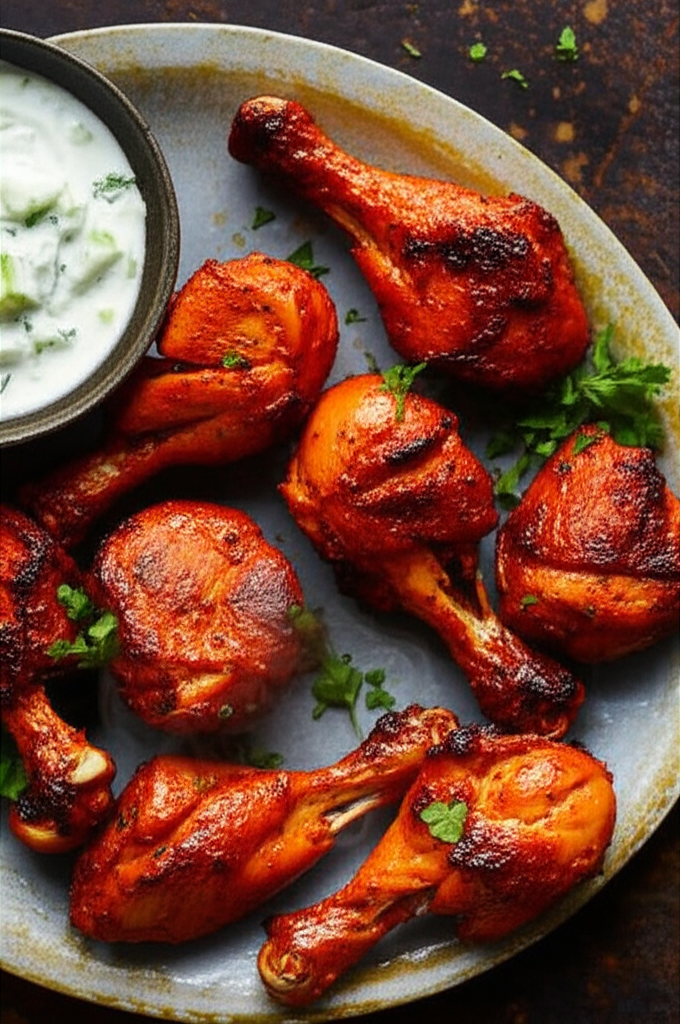
✨ The Soul of the Tandoor: Crafting Radiant Tandoori Chicken with a Verdant Cucumber Raita
There are certain flavors that transport you, not just to a place, but to a moment in time. For me, the scent of Tandoori Chicken does exactly that. It carries me back to a dusky evening in Jaipur, the air thick with the fragrance of marigolds and the distant echo of temple bells. In a bustling laneway, I first witnessed the magic of the tandoor, a cylindrical clay oven that is less a cooking vessel and more a culinary altar. Glowing with primal heat, it transformed marinated chicken into something sublime—charred at the edges, impossibly tender within, and radiating a color as vibrant as a Rajasthani sunset. This wasn’t merely food; it was a story told in smoke and spice.
Tandoori Chicken is a testament to the genius of Punjabi cuisine, a dish that balances fiery passion with profound depth. Its flavor profile is a symphony: the earthy warmth of cumin and coriander, the sharp, floral notes of garam masala, the subtle fire of Kashmiri chili, and the bright, acidic kiss of lemon. But the true soul of the dish lies in its yogurt marinade, an alchemical mixture that tenderizes the meat to a melting consistency while infusing it with layers of nuanced flavor. Paired with its essential counterpart—a cooling, creamy cucumber raita—the experience transcends a simple meal. It becomes a conversation between heat and coolness, spice and cream, intensity and tranquility. It is a dish best enjoyed in good company, under open skies if possible, where laughter can mingle with the lingering, aromatic smoke. It’s a sensory journey that engages the eyes with its crimson hue, the nose with its bouquet of spices, and finally, the palate with a crescendo of flavor that is at once bold and beautiful, rustic and refined.
🛒 Ingredients
- For the Tandoori Chicken:
- 4 bone-in, skin-on chicken thighs or drumsticks (about 2 lbs / 900g), skin removed, with deep gashes cut into the meat
- First Marinade:
- 1 tablespoon fresh ginger paste
- 1 tablespoon fresh garlic paste
- 1 tablespoon fresh lemon juice
- 1 teaspoon sea salt
- Second Marinade:
- 1 cup full-fat Greek yogurt (do not use low-fat; the richness is key)
- 2 tablespoons Kashmiri red chili powder (This is crucial for the vibrant color without excessive heat. Find it at an Indian market or specialty store.)
- 1 tablespoon ground coriander
- 1 tablespoon ground cumin
- 1 teaspoon turmeric powder
- 1 teaspoon Garam Masala
- 1 tablespoon mustard oil (for its authentic pungent flavor, or substitute with avocado oil)
- A pinch of saffron threads, crumbled (optional, for a touch of luxury)
- 2 tablespoons melted ghee or butter for basting
- Charred lemon wedges and fresh cilantro for garnish
- For the Cucumber Yogurt Sauce (Raita):
- 1 cup full-fat Greek yogurt
- 1 large English cucumber, finely grated
- 1/4 cup finely chopped fresh mint leaves
- 1/4 cup finely chopped fresh cilantro leaves
- 1 small green chili, finely minced (optional, for a gentle kick)
- 1/2 teaspoon roasted cumin powder (roast whole seeds in a dry pan until fragrant, then grind)
- A generous squeeze of fresh lime juice
- Sea salt to taste
A Note on Key Ingredients:
- Kashmiri Red Chili Powder: Unlike cayenne or standard chili powder, this variety is prized for its brilliant, deep red pigment rather than its Scoville rating. It imparts that iconic, fiery look to the chicken without overwhelming the palate with heat, allowing the other spices in the garam masala to sing. It is the artist’s brush in this recipe.
- Greek Yogurt: The foundation of both the marinade and the raita. Its thick, strained consistency ensures it clings beautifully to the chicken, forming a protective, flavor-packed crust. In the raita, it provides a velvety, cooling base. Nutritionally, it’s a powerhouse of protein and probiotics, essential for gut health and a cornerstone of a wellness-focused diet.
- Garam Masala: This is not a single spice, but a complex and aromatic blend, translating to “hot spice mixture.” Far from being just about heat, it refers to the Ayurvedic principle of warming the body. A good garam masala will feature notes of cinnamon, cloves, cardamom, black pepper, and nutmeg. It is added towards the end of the marinade to preserve its delicate, volatile oils, providing the final, fragrant grace note to the dish.
👨🍳 Instructions
-
Step 1: The Foundational Marinade & The Art of Patience
Your journey begins with preparing the canvas—the chicken. Pat the chicken pieces completely dry with a paper towel; moisture is the enemy of a good sear. Using a sharp paring knife, make 2-3 deep slashes into the thickest parts of the meat, cutting down to the bone. This is not just for aesthetics; these channels are conduits for flavor, allowing the marinade to penetrate deep into the muscle tissue. In a glass bowl, combine the first marinade ingredients: ginger paste, garlic paste, lemon juice, and salt. Rub this mixture vigorously into every slash and crevice of the chicken. The acidity of the lemon juice begins the tenderizing process. Cover and let this stand at room temperature for 30 minutes. This initial step is a non-negotiable ritual for achieving superior texture.
-
Step 2: The Second Marinade & Flavor Infusion
While the chicken rests, craft the second, richer marinade. In a separate, larger bowl, whisk the Greek yogurt until smooth. Add the Kashmiri chili powder, ground coriander, cumin, turmeric, garam masala, and mustard oil. If using saffron, crumble it directly into the mixture. Whisk until you have a homogenous, vibrant, and velvety paste. The aromas should be intoxicating. Now, add the chicken pieces to this yogurt mixture, ensuring each piece is generously and completely coated. Use your hands to massage the marinade into the gashes you made earlier. Cover the bowl tightly with plastic wrap and refrigerate for at least 8 hours, but for a truly transcendent result, allow it to marinate for a full 24 hours. Time is the secret ingredient that transforms good into exceptional.
-
Step 3: Crafting the Cooling Counterpoint – The Raita
The raita is a study in texture and temperature control. Grate the English cucumber using the large holes of a box grater. Place the grated cucumber in a fine-mesh sieve set over a bowl, sprinkle lightly with salt, and let it sit for 15-20 minutes. The salt will draw out a surprising amount of water. Afterwards, use your hands or the back of a spoon to press firmly, squeezing out all excess liquid. This crucial step prevents a watery, diluted sauce and ensures a thick, creamy consistency. In a clean bowl, combine the drained cucumber with the Greek yogurt, chopped mint, cilantro, optional green chili, and roasted cumin powder. Stir gently to combine, then season with lime juice and salt to your taste. For the best flavor, let the raita chill in the refrigerator for at least 30 minutes to allow the flavors to meld. Never over-mix; you want to maintain the integrity of the ingredients.
-
Step 4: The Alchemy of Fire & Heat
True tandoori cooking requires blistering heat. You can replicate this effect in several ways. Preheat your oven to its highest setting (around 475°F / 245°C) with a wire rack set over a foil-lined baking sheet inside. The wire rack allows for air circulation, cooking the chicken evenly and creating that signature char. Remove the chicken from the marinade, shaking off any thick excess but leaving a substantial coating. Arrange the pieces on the hot rack, ensuring they don’t touch. Bake for 15 minutes. Then, remove from the oven, baste generously with melted ghee or butter, and return to the oven for another 10-15 minutes, or until the chicken is cooked through and beautifully charred in spots. For an even better result, finish under the broiler for the last 2-3 minutes, watching carefully to prevent burning. Let the chicken rest for 10 minutes before serving; this allows the juices to redistribute, guaranteeing a moist, succulent bite.
-
Step 5: The Plating & The Final Flourish
Plating is the final act of respect for the ingredients and the process. Arrange the rested Tandoori Chicken on a warm platter, perhaps a rustic wooden board or a piece of slate. Garnish generously with fresh cilantro sprigs. Place the charred lemon wedges alongside the chicken, ready to be squeezed over for a final burst of bright acidity. Serve the chilled raita in a separate, beautiful bowl on the side. The visual contrast is stunning: the fiery red of the chicken against the cool, verdant green of the raita. Encourage your guests to spoon the raita over each bite, creating their own perfect balance of heat and coolness. This dish pairs elegantly with warm naan bread and a simple salad of sliced red onions, cucumber, and tomatoes.
🧪 Nutritional Analysis
- Serving Size: 1 chicken thigh with approximately 1/4 cup of raita
- Calories: Approximately 450-500 kcal
- Protein: ~40g
- Carbohydrates: ~8g
- Fat: ~28g (Primarily from chicken, yogurt, and ghee)
- Fiber: ~2g
- Sugar: ~5g (Naturally occurring from yogurt)
- Sodium: ~600mg (Can be adjusted based on salt usage)
- Dietary Fit: This dish is naturally gluten-free and high in protein. It fits well within a low-carb lifestyle when served without naan or rice.
💚 Health Benefits
- Lean Protein Powerhouse: Chicken is an excellent source of high-quality lean protein, which is fundamental for muscle repair, immune function, and maintaining a healthy metabolism.
- Probiotic Support for Gut Health: The generous use of Greek yogurt in both the marinade and the raita introduces beneficial probiotics into your diet, which help cultivate a healthy gut microbiome, aiding digestion and enhancing nutrient absorption.
- Anti-Inflammatory Spice Cabinet: This dish is a treasure trove of anti-inflammatory compounds. Ginger (gingerol), garlic (allicin), and especially turmeric (curcumin) are well-researched for their ability to combat chronic inflammation in the body.
- Metabolism and Digestive Aid: The blend of spices, particularly cumin and chili, can provide a gentle boost to your metabolic rate. Additionally, ginger is a well-known carminative, helping to soothe the digestive system.
- Rich in Micronutrients: Beyond the macros, this dish delivers essential vitamins and minerals. You’ll find B-vitamins for energy production in the chicken, calcium in the yogurt for bone health, and iron for oxygen transport.
- Hydration and Skin Health: The cucumber in the raita is over 95% water, providing excellent hydration. It also contains silica, a trace mineral that contributes to healthy connective tissue, promoting radiant skin and strong hair.
🌟 Final Thoughts from Chef Adam Jorive
In my kitchen, I believe the most profound dishes are those that achieve a perfect harmony between indulgence and wellness, tradition and innovation. This Tandoori Chicken is the embodiment of that philosophy. Do not be daunted by the lengthy marination or the list of spices; see it instead as a ritual, a slow and meditative practice that connects you to an ancient culinary art form. Cooking is a journey, and this recipe is a vibrant stop along the way. Feel free to experiment—perhaps add a pinch of smoked paprika to the marinade for a deeper, smokier flavor if you are cooking indoors, or try different herbs in your raita. The beauty of food lies in its ability to be both a precise science and a personal expression. Ultimately, my hope is that when you create this dish, you are not just making a meal. You are crafting an experience—a plate that is as nourishing for the body as it is beautiful to the eye and joyful to the soul. That, to me, is the true essence of five-star cooking, right in your own home.