
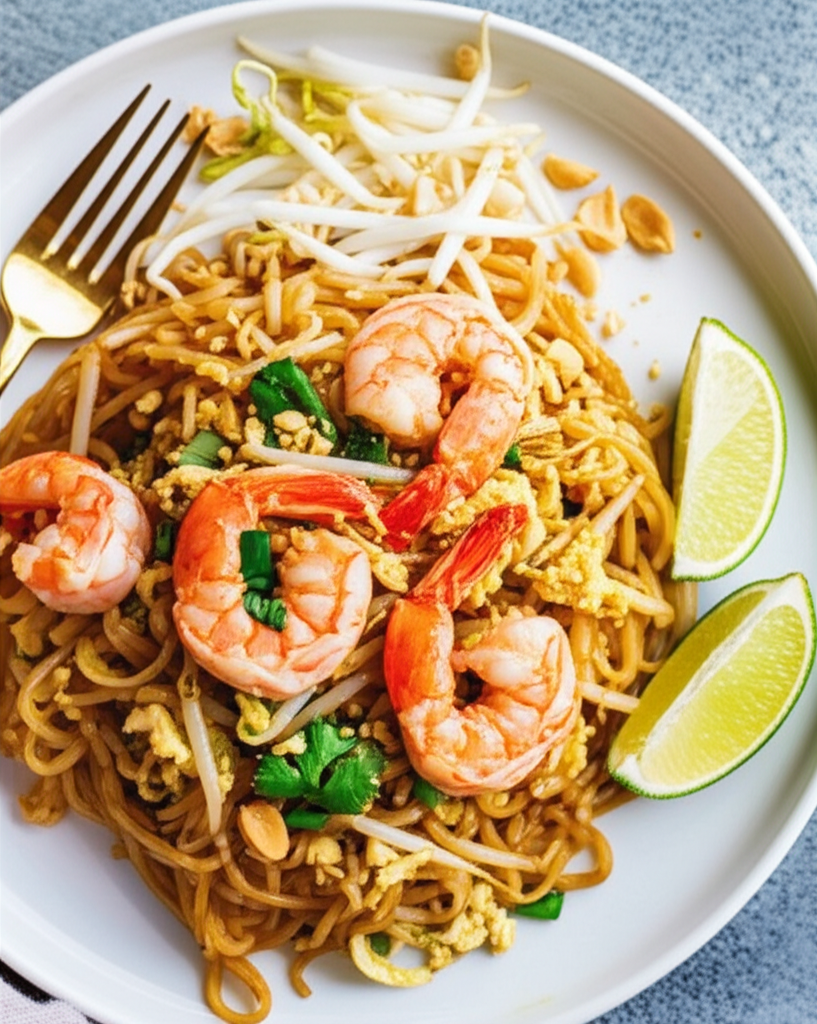
✨ The Soul of Bangkok in 30 Minutes: A Chef’s Guide to Quick & Vibrant Shrimp Pad Thai ✨
There are certain aromas that transport you instantly across continents. For me, the scent of tamarind, fish sauce, and chili sizzling in a searing hot wok is a direct portal to the vibrant, chaotic, and utterly intoxicating streets of Bangkok. I remember my first culinary pilgrimage to Thailand, standing mesmerized by a street vendor whose hands moved with the fluid grace of a dancer. In minutes, with a clang of the spatula and a spectacular burst of flame, she transformed a humble handful of noodles into a masterpiece of texture and taste. That dish, Pad Thai, wasn’t just food; it was a symphony of a nation’s culinary soul, served on a simple plate. It’s a dish born not in royal palaces but from the people, a testament to the ingenuity of creating something extraordinary from accessible ingredients. This quick version I’ve developed for you is my homage to that memory, a way to capture the essence of that street-side magic in your own kitchen, without the hours of prep. We will create a plate that is a kaleidoscope of sensations: the tender chew of the rice noodles, the sweet snap of perfectly cooked shrimp, the satisfying crunch of peanuts and fresh bean sprouts, all enrobed in a sauce that masterfully balances sweet, sour, salty, and a whisper of heat. This isn’t just a recipe; it’s an invitation to bring the world into your home, to cook with intention, and to create a meal that nourishes both body and spirit.
🛒 Ingredients
- For the Pad Thai Sauce:
- 3 tablespoons tamarind concentrate (paste)
- 3 tablespoons premium fish sauce (Nam Pla)
- 3 tablespoons coconut sugar (or light brown sugar)
- 1 tablespoon fresh lime juice
- 1 teaspoon sriracha or chili garlic sauce (adjust to your heat preference)
- 2 tablespoons water
- For the Stir-Fry:
- 8 ounces dried flat rice noodles (about 1/4-inch wide, often labeled “Pad Thai” or “Chantaboon”)
- 2 tablespoons high-smoke-point oil (like avocado or refined coconut oil)
- 8 ounces raw large shrimp (about 16-20 count), peeled and deveined
- 3 cloves garlic, finely minced
- 1 large shallot, thinly sliced
- 2 large free-range eggs, lightly beaten
- 2 cups fresh mung bean sprouts, divided
- 3 scallions (green onions), cut into 1-inch pieces
- 1/2 cup firm or extra-firm tofu, pressed and cut into ½-inch cubes (optional, for added texture and protein)
- For Garnish (Essential for Authenticity):
- 1/2 cup roasted peanuts, coarsely chopped
- 1/4 cup fresh cilantro, leaves picked
- 2 lime wedges
- Red pepper flakes (optional, for extra heat)
- Key Ingredients Explained:
- Tamarind Concentrate: This is the heart of Pad Thai’s signature flavor profile. It’s a dark, thick paste made from the fruit of the tamarind tree, delivering a complex, fruity sourness that is completely distinct from the sharpness of vinegar or citrus. Its natural acidity tenderizes proteins and helps to balance the sweetness and saltiness of the other sauce components. Nutritionally, it’s a source of antioxidants and can aid in digestion.
- Premium Fish Sauce (Nam Pla): Do not compromise here. A high-quality fish sauce, like Red Boat or Megachef, is brewed purely from anchovies and salt. It provides an intense, savory depth—the quintessential umami of Southeast Asian cooking. It should smell briny and rich, not overwhelmingly ‘fishy’. This single ingredient elevates the dish from a simple sweet and sour noodle stir-fry to an authentic Thai experience.
- Dried Flat Rice Noodles: The structure of the dish depends on these. Unlike Italian pasta, rice noodles are not boiled but soaked in hot water until pliable yet still firm (al dente). This prevents them from turning to mush in the high heat of the wok. Their neutral flavor makes them the perfect canvas for absorbing the vibrant sauce.
👨🍳 Instructions
- Mise en Place: The Chef’s First Commandment. The velocity of wok cooking demands that every component is prepared and within arm’s reach before you even think of turning on the heat. First, address the noodles. Place the dried rice noodles in a large bowl and cover them with very hot (but not boiling) tap water. Let them soak for about 15-20 minutes, or until they are flexible and pliable but still have a firm, “al dente” core. They will finish cooking in the wok. Drain them completely and set aside. While the noodles soak, whisk together all the sauce ingredients—tamarind, fish sauce, coconut sugar, lime juice, sriracha, and water—in a small bowl until the sugar is fully dissolved. Taste and adjust; it should be a powerful balance of sweet, sour, and salty. Finally, prep your aromatics and garnishes: mince the garlic, slice the shallot, chop the scallions and peanuts, and have your beaten eggs and bean sprouts ready. This disciplined preparation is the secret to a calm, successful stir-fry.
- Searing the Protein & Building the First Layer. Place a large wok or a heavy-bottomed skillet over high heat. A well-seasoned carbon steel wok is traditional and ideal for developing “wok hei”—the smoky essence of high-heat stir-frying. When the pan is almost smoking, add 1 tablespoon of the oil. Swirl to coat. Carefully place the shrimp in a single layer, ensuring they don’t touch. Let them sear undisturbed for 60-90 seconds until a beautiful pink crust forms on the bottom. Flip and cook for another 30-45 seconds. The goal is to get them about 80% cooked; they will finish cooking later. Immediately remove the shrimp from the wok and set them aside. This prevents them from becoming tough and rubbery. If using tofu, sear the cubes now until golden brown on all sides and set aside with the shrimp.
- Aromatics and the Egg Ribbon. Lower the heat to medium-high. Add the remaining tablespoon of oil to the wok. Add the minced garlic and sliced shallots, and stir-fry vigorously for 30 seconds until they become fragrant and translucent. Do not let them burn, as this will impart a bitter taste. Push the aromatics to one side of the wok. Pour the lightly beaten eggs into the empty side. Let the eggs set for about 20-30 seconds, then gently scramble them with your spatula, breaking them into soft, ribbon-like pieces. Once cooked, gently toss them together with the aromatics.
- The Grand Toss: Uniting Noodles and Sauce. Now, move quickly. Add the drained, soaked noodles to the wok. Pour the prepared Pad Thai sauce evenly over the noodles. Using two spatulas or a pair of tongs and a spatula, begin to toss everything together. Your technique should be one of lifting and folding, not stirring, to prevent the delicate noodles from breaking. Continue tossing for 2-3 minutes, allowing the noodles to absorb the sauce and finish cooking. The sauce will thicken and cling beautifully to each strand. Once the noodles are tender and coated, add back the seared shrimp (and tofu, if using), along with half of the bean sprouts and all the scallions. Toss for one final minute to heat everything through while preserving the crisp texture of the sprouts and the freshness of the scallions.
- Plating: The Final Flourish. Immediately transfer the Pad Thai from the hot wok onto two warm serving plates, mounding it attractively in the center. The presentation is as crucial as the flavor. Garnish generously with the chopped roasted peanuts, a scattering of fresh cilantro leaves, and the remaining fresh bean sprouts on the side for added crunch. Place a lime wedge on the edge of each plate—a final squeeze of fresh lime juice just before eating will awaken all the flavors. Serve immediately, perhaps with a side of additional red pepper flakes for those who desire more fire.
🧪 Nutritional Analysis
- Calories per serving: Approximately 620 kcal
- Protein: 28g
- Carbohydrates: 75g
- Fat: 22g
- Fiber: 6g
- Sugar: 18g (Primarily from coconut sugar and tamarind)
- Sodium: Approximately 1400mg (Can be reduced by using low-sodium fish sauce and tamari)
- Dietary Notes: This recipe is naturally gluten-free as rice noodles are used. For a lower-carb version, substitute rice noodles with spiralized zucchini or shirataki noodles, adding them in the last minute of cooking. For a vegan dish, omit the shrimp and egg, and substitute the fish sauce with a high-quality vegan fish sauce or an equal amount of tamari/coconut aminos mixed with a pinch of crushed seaweed for umami depth. Double the tofu for a hearty plant-based protein source.
💚 Health Benefits
- Lean Protein Powerhouse: Shrimp provides high-quality, lean protein essential for muscle repair and satiety, all while being low in calories and fat.
- Antioxidant Rich: The garlic and shallots contain allicin, and shrimp contains astaxanthin, powerful antioxidants that combat oxidative stress and cellular damage in the body.
- Digestive Harmony: Tamarind is a traditional remedy for digestive issues. Its natural tartaric acid and fiber content promote healthy digestion and gut motility.
- Heart-Healthy Fats: The roasted peanuts contribute monounsaturated fats, which are known to support cardiovascular health by helping to lower bad cholesterol levels.
- Metabolic Boost: The capsaicin found in the chili sauce and red pepper flakes can provide a temporary boost to your metabolism and has been studied for its anti-inflammatory properties.
– Immune System Support: A single serving provides a significant amount of Vitamin C from the lime juice and trace minerals like zinc and selenium from the shrimp, both of which are crucial for a robust immune response.
🌟 Final Thoughts from Chef Adam Jorive
In every bite of this Pad Thai, you should taste a story of balance—a core principle not just in Thai cooking, but in a life well-lived. This dish is a beautiful metaphor for wellness itself. It is vibrant, satisfying, and deeply nourishing without being heavy. It proves that healthy eating is not about deprivation, but about celebrating whole, flavorful ingredients. I urge you to see this recipe as a blueprint, not a rigid doctrine. Is it a sweltering summer day? Add fresh julienned cucumber and mint. Do you have beautiful scallops on hand? Sear them instead of the shrimp. Your kitchen is your studio, and ingredients are your palette. The goal is to create something that delights your senses, honors your body, and brings a moment of pure, unadulterated joy. This is the alchemy of cooking: transforming simple elements into an experience that is so much greater than the sum of its parts. Cook with passion, eat with mindfulness, and share with love.