
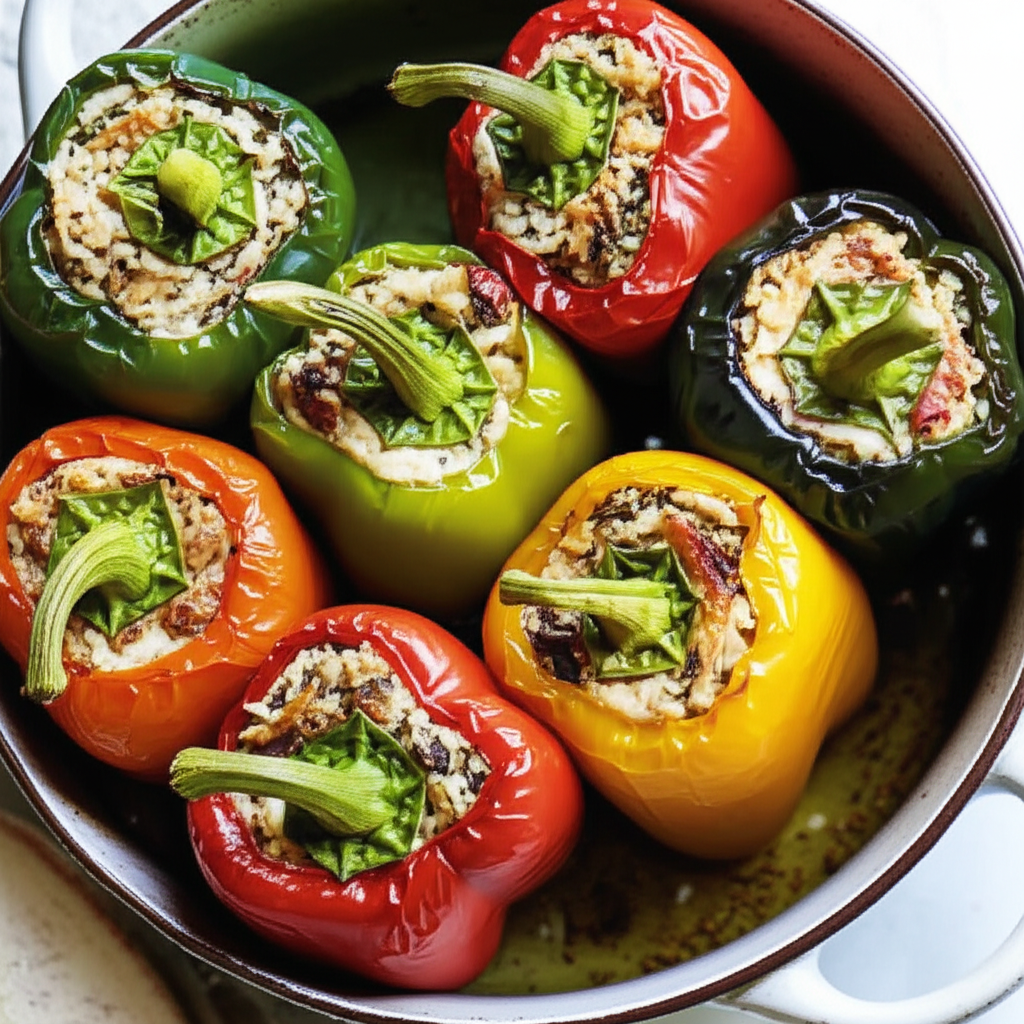
✨ Peperoni Ripieni: A Sun-Drenched Passage to the Italian Soul
There are dishes that merely feed the body, and then there are those that narrate a history, that cradle a memory in their very structure. The Italian Stuffed Pepper, or Peperoni Ripieni, is unequivocally the latter. It is not just food; it is a vessel of culinary storytelling, born from the sun-drenched fields and resourceful kitchens of Southern Italy. To me, this dish is a sensory postcard from a place where time moves with the gentle rhythm of the seasons. I first experienced its true essence not in a bustling Roman trattoria, but in a quiet, stone-walled kitchen in a small Puglian village. An elderly nonna, her hands moving with the practiced grace of a lifetime, showed me how these humble peppers could be transformed into edible jewels. She spoke of cucina povera—’the kitchen of the poor’—not as a cuisine of lack, but as a philosophy of ingenuity, of using the earth’s bounty with respect and creativity.
Each element sings in a chorus of Mediterranean flavor. The bell pepper, its candy-like sweetness deepened by a slow roast, becomes a tender, yielding cup. Inside, the filling is a masterpiece of texture and aroma: creamy Arborio rice, infused with the bright, almost licorice-like whisper of fresh basil, the clean, green notes of parsley, and the pungent depth of garlic, all bound by the golden richness of extra-virgin olive oil and the subtle tang of sun-ripened tomatoes. To eat Peperoni Ripieni is to experience a moment of pure, rustic elegance. It is best enjoyed on a warm evening, perhaps on a terrace with terracotta pots overflowing with geraniums, a glass of crisp Vermentino in hand. The aroma that fills the air as they bake—a perfume of sweet vegetables, toasting rice, and fragrant herbs—is the very essence of Italian hospitality. It’s a dish that invites you to slow down, to savor, and to connect with a simpler, more profound way of eating.
🛒 Ingredients
- Bell Peppers: 4 large, vibrant bell peppers (a mix of red, yellow, and orange is visually stunning).
- Rice: 1 cup (200g) Arborio or Carnaroli rice, uncooked.
- Tomatoes: 1 cup (250g) cherry tomatoes, finely chopped, or 1 cup high-quality canned crushed tomatoes (like San Marzano).
- Onion: 1 medium yellow onion, finely diced (a technique known as brunoise).
- Garlic: 3 cloves, minced to a fine paste.
- Fresh Herbs: ½ cup packed fresh basil, chopped, plus ½ cup packed flat-leaf parsley, chopped. Reserve some for garnish.
- Cheese: ½ cup (50g) freshly grated Parmigiano-Reggiano or Pecorino Romano.
- Olive Oil: ¼ cup extra-virgin olive oil, plus more for drizzling.
- Vegetable Broth: 2 cups (approx. 500ml), warm.
- Seasoning: 1 tsp sea salt, ½ tsp freshly ground black pepper.
- Optional Additions: 2 tbsp capers (rinsed), ¼ cup toasted pine nuts, or a pinch of red pepper flakes for a gentle heat.
- Gourmet Substitution: For a heartier, nuttier texture and added fiber, you can substitute the Arborio rice with an equal amount of cooked farro or quinoa. If you are not vegetarian, 100g of finely diced pancetta or high-quality Italian sausage (removed from its casing) can be rendered in the pan before adding the onion.
A Note on Key Ingredients:
- Arborio Rice: This short-grain Italian rice is the heart of our filling. Unlike standard long-grain rice, its high starch content (amylopectin) creates a luxuriously creamy texture when cooked, binding the ingredients together into a cohesive, risotto-like heart without becoming mushy. This creaminess is essential for the decadent mouthfeel of the final dish.
- The Bell Peppers: Think of the peppers not merely as containers, but as the primary flavor component. As they roast, their natural sugars caramelize, transforming their taste from crisp and vegetal to profound sweetness. The choice of color is more than aesthetic; red peppers tend to be the sweetest, while yellow and orange offer a milder, fruitier counterpoint.
- High-Quality Olive Oil: In a dish this simple, the quality of your olive oil is paramount. A true extra-virgin olive oil lends a peppery, fruity backbone that complements every other ingredient. It’s used not just for cooking but as a finishing element, delivering a final flourish of flavor and healthful monounsaturated fats.
👨🍳 Instructions
-
Step 1: The Art of Preparing the Peppers
Your first task is to prepare your colorful vessels. You have two classic approaches: you can either slice the peppers in half lengthwise, creating two “boats,” or you can perform a “decapitation,” slicing off the top quarter-inch and reserving the “lids” to be placed back on during baking. I prefer the boat method for more even cooking and a beautiful presentation. Carefully scoop out the seeds and white pith with a small spoon. To elevate the final texture and ensure a vibrant color, we will blanch them. Bring a large pot of salted water to a rolling boil. Plunge the pepper halves into the water for exactly 2-3 minutes. This quick bath tenderizes them slightly and locks in their brilliant hue. Immediately transfer them to an ice bath to halt the cooking process. Pat them thoroughly dry and arrange them snugly in a baking dish, cut-side up. -
Step 2: Building the Aromatic Foundation (The Soffritto)
The soul of any great Italian dish begins with the soffritto. In a large skillet or Dutch oven, heat ¼ cup of olive oil over medium heat. The oil should shimmer but not smoke. Add your finely diced onion and sweat it gently, stirring occasionally, for 5-7 minutes. We are not looking for color here, but for translucency and sweetness. This slow, patient step coaxes out the onion’s natural sugars. Once the onion is soft, add the minced garlic and cook for another minute until its fragrance blooms. Be vigilant; burnt garlic will introduce an unforgivable bitterness. Now, add the uncooked Arborio rice. Toast the grains in the pan for 2-3 minutes, stirring constantly. You’ll see the edges of the grains become translucent. This essential step gives the final filling a wonderful, nutty depth of flavor. -
Step 3: Composing the Filling
With the rice toasted, it’s time to build our flavor symphony. Pour in the chopped or crushed tomatoes, salt, and pepper. Stir to combine, allowing the tomatoes to release their juices and coat the rice, about 2-3 minutes. Now, begin adding the warm vegetable broth, about half a cup at a time, stirring as you would for a risotto. Let each addition be almost fully absorbed before adding the next. This process should take about 15-18 minutes. The rice should be al dente—cooked through but with a slight bite in the center. It will finish cooking inside the peppers. Remove the pan from the heat. Now, stir in the majority of your chopped basil and parsley, the grated Parmigiano-Reggiano, and any optional additions like capers or pine nuts. The mixture should be thick and creamy, not watery. Taste and adjust seasoning if necessary. The balance of savory, fresh, and tangy is critical. -
Step 4: Stuffing and Roasting to Perfection
Preheat your oven to 375°F (190°C). Carefully spoon the luscious rice filling into each blanched pepper half. Do not pack the filling too tightly; give the rice a little room to breathe and expand as it finishes cooking. Mound it slightly on top. Pour about ½ cup of water or vegetable broth into the bottom of the baking dish—this will create steam, preventing the peppers from scorching and keeping them moist. Brush the tops of the filling and the edges of the peppers with a little olive oil. Bake, uncovered, for 35-45 minutes. The peppers should be completely tender, slightly wrinkled at the edges, and the top of the filling should be gloriously golden brown and crusty. If you saved the pepper “lids,” you can place them on top for the last 10 minutes of baking. -
Step 5: The Final Flourish and Plating
Allow the peppers to rest in the baking dish for 5-10 minutes after removing them from the oven. This is not an idle wait; it allows the flavors to settle and meld, making them easier and more pleasant to eat. For plating, use a wide spatula to gently transfer a stuffed pepper (or two halves) onto each plate. Drizzle liberally with your best extra-virgin olive oil. Garnish with the reserved fresh basil and parsley, and an extra sprinkle of Parmigiano-Reggiano. The contrast of the vibrant greens against the roasted pepper and golden filling is a feast for the eyes before it ever touches the lips. Serve warm, not scalding hot, to allow the nuanced flavors to shine.
🧪 Nutritional Analysis
(Approximate values per serving, assuming 4 servings from the recipe)
- Calories: 420-450 kcal
- Protein: 12g
- Carbohydrates: 55g
- Fat: 18g (primarily healthy monounsaturated fats from olive oil)
- Fiber: 8g
- Sugar: 12g (naturally occurring from vegetables)
- Sodium: 750mg (can be reduced by using low-sodium broth)
- Dietary Fit: This dish is naturally gluten-free and vegetarian. To make it vegan, simply omit the cheese or substitute with a high-quality, nut-based parmesan alternative.
💚 Health Benefits
- Cardiovascular Support: The combination of lycopene from the cooked tomatoes and monounsaturated fats from extra-virgin olive oil is a powerhouse for heart health, helping to manage cholesterol levels and reduce oxidative stress.
- Rich in Antioxidants: Bell peppers are exceptionally high in Vitamin C and various carotenoids, like capsanthin in red peppers. These antioxidants combat cellular damage from free radicals, supporting overall vitality.
- Anti-Inflammatory Properties: Garlic contains allicin, and olive oil contains oleocanthal, both of which are compounds celebrated for their natural anti-inflammatory effects, contributing to joint health and reduced systemic inflammation.
- Sustained Energy & Digestive Health: The complex carbohydrates and significant fiber from the vegetables and rice provide a source of slow-release energy, preventing blood sugar spikes. The fiber is also crucial for promoting a healthy gut microbiome and ensuring smooth digestion.
- Immune System Fortification: The potent dose of Vitamin C from the peppers and tomatoes, combined with the immune-supportive compounds in onion and garlic, makes this dish an excellent choice for bolstering your body’s natural defenses.
- Bone Health: Parmigiano-Reggiano is not just for flavor; it’s a significant source of calcium and Vitamin K2, both essential for maintaining strong, healthy bones.
🌟 Final Thoughts from Chef Adam Jorive
In the world of cuisine, I believe the most profound dishes are those that achieve a perfect harmony between pleasure and wellness, tradition and innovation. Peperoni Ripieni is a beautiful embodiment of this philosophy. It takes simple, honest ingredients and transforms them into something that feels both comforting and utterly sophisticated. This recipe is a canvas, not a commandment. I urge you to see it as a starting point for your own culinary exploration. What if you introduced the earthy notes of wild mushrooms? Or the briny pop of Kalamata olives? Perhaps trade the rice for protein-rich lentils or chickpeas for a different textural journey. The spirit of Italian cooking is one of adaptation and personal touch. Create a version that tells your story. In the end, cooking should be an act of joy and a celebration of life. It’s about creating food that not only looks beautiful and tastes extraordinary but also leaves you feeling vibrant and nourished from the inside out. Buon appetito.