
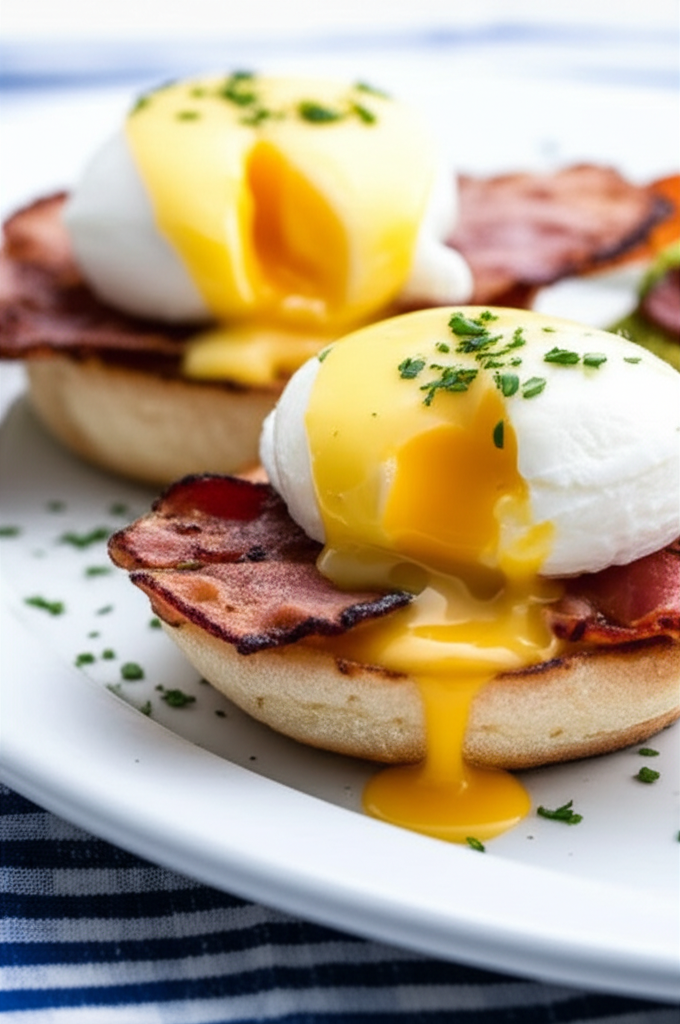
✨ The Benedict Symphony: Composing an American Classic with Elegance and Wellness
There are certain dishes that are not merely food, but events in themselves. They are markers of time, reserved for slow, sun-drenched mornings, the clinking of glasses, and the shared, unhurried laughter of loved ones. Eggs Benedict is, without question, the maestro of this brunch orchestra. To many, it is a symbol of pure indulgence—a rich, decadent crescendo of flavor. But to me, it is a lesson in balance, a culinary dance between richness and acidity, softness and crispness, tradition and wellness. Its origin story is shrouded in the elegant mystique of turn-of-the-century New York, with tales of a Wall Street broker named Lemuel Benedict curing a hangover at the Waldorf-Astoria, and competing claims from the kitchens of Delmonico’s. Regardless of its true genesis, its soul remains the same: it is a dish of profound comfort and sophistication.
Close your eyes and imagine the moment. A perfectly poached egg, a taut, gleaming orb, sits atop a warm raft of Canadian bacon and a toasted English muffin. With the gentle press of a fork, the yolk gives way, releasing a river of liquid gold that flows into the velvety, lemon-kissed hollandaise. The first bite is a revelation—a symphony of sensations. The tangy, buttery sauce envelops the palate, its richness cut through by the sharp, salty pork. The yielding tenderness of the egg white and the molten yolk are grounded by the hearty, textured crumb of the muffin. It is not a dish to be rushed; it is a ritual to be savored. In my kitchen, we approach the Benedict not as a guilty pleasure, but as a celebration of high-quality ingredients, a masterpiece of technique, and a nourishing start to a beautiful day. It is proof that the most luxurious experiences can also be the most mindful.
🛒 Ingredients
- For the Poached Eggs:
- 4 large, fresh, pasture-raised eggs
- 2 tablespoons white wine vinegar
- A generous pinch of sea salt
- For the Hollandaise Sauce:
- 3 large, pasture-raised egg yolks
- 1 cup (227g) unsalted, high-quality butter, clarified (see explanation below)
- 1 ½ tablespoons freshly squeezed lemon juice
- A pinch of cayenne pepper or smoked paprika
- Fine sea salt and freshly ground white pepper to taste
- For Assembly:
- 2 English muffins, split
- 4 slices of high-quality Canadian bacon or back bacon
- 1 tablespoon unsalted butter, for toasting
- Freshly chopped chives or dill for garnish
- Gourmet Substitutions & Additions:
- Replace Canadian bacon with thinly sliced Prosciutto di Parma, smoked salmon, or sautéed spinach for a Florentine variation.
- Use a buttery brioche bun instead of an English muffin for a softer, richer base.
- Add a teaspoon of white truffle oil to the finished hollandaise for an unforgettable earthy aroma.
A Chef’s Note on Key Ingredients:
- Pasture-Raised Eggs: The soul of this dish is the egg. When you choose pasture-raised, you are not just making a more ethical choice; you are investing in superior flavor and nutrition. The yolks are a vibrant, deep orange—a visual cue of their higher concentration of vitamins A and E, and brain-loving omega-3 fatty acids. This translates to a richer, more golden hollandaise and a poached egg with unparalleled flavor.
- Clarified Butter (Ghee): For a hollandaise sauce, we must use clarified butter. The process of clarifying involves gently melting butter and skimming off the milk solids that float to the top, leaving behind pure, liquid gold butterfat. This is crucial for two reasons: it raises the smoke point, but more importantly for this sauce, it removes the water and milk solids that can cause an emulsion to “break” or separate. The resulting hollandaise is silkier, more stable, and possesses a cleaner, more intense butter flavor.
- Freshly Squeezed Lemon Juice: Never, ever use the bottled variety. The magic of a good hollandaise lies in the delicate balance between the fatty richness of the butter and yolks, and the bright, sharp acidity of the lemon. Fresh lemon juice provides this essential counterpoint, cutting through the opulence and awakening the palate. Its acidity also plays a chemical role, helping to stabilize the delicate emulsion of fat and liquid.
👨🍳 Instructions
-
Step 1: The Mise en Place & The Art of Clarified Butter
In a professional kitchen, everything begins with preparation. First, clarify your butter. Gently melt the cup of unsalted butter in a small saucepan over low heat. As it melts, white milk solids will rise to the surface. Skim these off meticulously with a spoon and discard. Allow the butter to settle for a moment, then carefully pour the clear, golden butterfat into a liquid measuring cup, leaving the remaining milk solids at the bottom of the pan. You should have about ¾ cup of clarified butter. Keep it warm, but not hot. Next, juice your lemon, separate your three egg yolks into a medium heat-proof bowl (stainless steel is best), and have your whisk ready. This setup is your foundation for success. -
Step 2: Crafting a Flawless Hollandaise
Create a double boiler (or a bain-marie) by setting your heat-proof bowl with the egg yolks over a saucepan filled with an inch of simmering, not boiling, water. The bottom of the bowl should not touch the water. Add the lemon juice and a pinch of salt to the yolks. Begin whisking immediately and continuously. You are looking for the mixture to lighten in color, double in volume, and achieve the “ribbon stage”—when you lift the whisk, the mixture should fall back in a thick ribbon that sits on the surface for a few seconds. This aerates the yolks and gently cooks them, preparing them to accept the butter. Once at the ribbon stage, remove the bowl from the heat. Begin adding the warm clarified butter, starting with a single drop, whisking constantly. Then add it in a very thin, steady stream. This gradual addition is the secret to a stable emulsion. If you add the butter too quickly, the sauce will break. Once all the butter is incorporated, the sauce should be smooth, thick, and pale yellow. Season with salt, white pepper, and a pinch of cayenne. To keep it warm while you prepare the other components, place it in a small thermos or keep the bowl in a warm (but not hot) spot in your kitchen. -
Step 3: The Perfect Poach
Fill a wide, deep saucepan with about 3-4 inches of water. Add the white wine vinegar and a good pinch of salt, bringing it to a gentle simmer—you should see small, lazy bubbles rising from the bottom, but the surface should be relatively calm (around 180-190°F or 82-87°C). A rolling boil will tear your eggs apart. Crack each fresh egg into a separate small ramekin or cup. This allows you to slide the egg into the water gently. Create a gentle vortex in the water by stirring it with a spoon. Slide one egg into the center of the vortex; the motion will help the egg white wrap around itself. Poach for 3 to 4 minutes for a firm white and a perfectly liquid yolk. Do not overcrowd the pan; cook two eggs at a time. To test for doneness, gently lift an egg with a slotted spoon and poke the yolk area—the white should feel set, but the yolk should have a soft jiggle. Remove the eggs with the slotted spoon and let them drain on a plate lined with a clean kitchen towel to absorb excess water. -
Step 4: The Final Assembly and Plating
While the eggs are poaching, prepare your base. Toast the split English muffins until they are golden brown and crisp at the edges. You can do this in a toaster or in a skillet with a touch of butter for added flavor. In that same skillet, gently sear the slices of Canadian bacon for about a minute per side, just until they are heated through and have a slight caramelization on the edges. Now, you are ready to build. Place two muffin halves on a warm plate. Top each with a slice of the warm Canadian bacon. Carefully place a beautifully poached egg on top of each. Take your warm hollandaise and generously spoon or drape it over each egg, allowing it to cascade down the sides. The artistry is in the drape. Finish with a final flourish: a light dusting of smoked paprika for color and a sprinkle of finely chopped fresh chives for a delicate, fresh oniony note. Serve immediately and with great pride.
🧪 Nutritional Analysis
Approximate values per serving (one plate with two Eggs Benedict). Values may vary based on specific ingredients used.
- Calories: 780 kcal
- Protein: 32g
- Fat: 55g (primarily from butter and egg yolks)
- Carbohydrates: 35g
- Fiber: 2g
- Sugar: 4g
- Sodium: 1350mg
- Dietary Notes: This dish is naturally high in protein and fat. For a gluten-free version, simply substitute a high-quality gluten-free English muffin. For a low-carb/keto-friendly approach, serve the poached eggs and hollandaise over a bed of wilted spinach, sautéed asparagus, or avocado halves instead of the muffin. For a vegetarian delight, replace the Canadian bacon with wilted spinach (Florentine) or thick slices of ripe tomato and avocado (California-style).
💚 Health Benefits
- Rich in Choline for Brain Health: Egg yolks are one of nature’s most concentrated sources of choline, a vital nutrient that supports brain development, memory function, and the production of neurotransmitters that regulate mood.
- High-Quality Protein for Satiety and Muscle Repair: The combination of eggs and Canadian bacon delivers a powerful punch of complete protein, which is essential for building and repairing tissues, maintaining muscle mass, and promoting a long-lasting feeling of fullness that helps stabilize energy levels.
- Healthy Fats for Hormonal and Cellular Function: Sourcing pasture-raised eggs provides a better balance of omega-3 and omega-6 fatty acids, which can help reduce inflammation. The healthy fats from both the egg yolks and high-quality butter are crucial for absorbing fat-soluble vitamins (A, D, E, K) and supporting hormone production.
- Vitamin D for Bone and Immune Health: Egg yolks are one of the few natural food sources of Vitamin D, the “sunshine vitamin,” which is critical for calcium absorption, bone density, and a robust immune system.
- Concentrated Source of B-Vitamins: This dish provides a significant amount of B-vitamins, including B12 (for nerve function and red blood cell formation) and B5 (pantothenic acid, which helps convert food into energy).
- Antioxidant Boost from Lemon and Herbs: The fresh lemon juice in the hollandaise provides a dose of Vitamin C, a potent antioxidant, while the garnish of fresh chives or dill adds not only flavor but also a spectrum of phytonutrients and a small boost of Vitamin K.
🌟 Final Thoughts from Chef Adam Jorive
Eggs Benedict is more than a recipe; it is a rite of passage for any serious home cook. It teaches us about temperature control, the beautiful chemistry of emulsions, and the importance of timing. Do not be intimidated by the hollandaise—embrace it as a challenge. The first time you see the yolks and butter transform into that silken, glossy sauce is a moment of pure culinary magic. Once you have mastered this classic form, I implore you to use it as a canvas. The plate is yours to paint. Imagine a base of crispy potato rösti, a topping of buttery lobster, or a hollandaise infused with saffron or chipotle. The true essence of a wellness-focused culinary life is found in this beautiful balance: honoring timeless tradition while celebrating personal creativity, and understanding that true indulgence comes from quality, not quantity. Create something beautiful, nourish your body, and most importantly, share the joy of a meal made with love.