
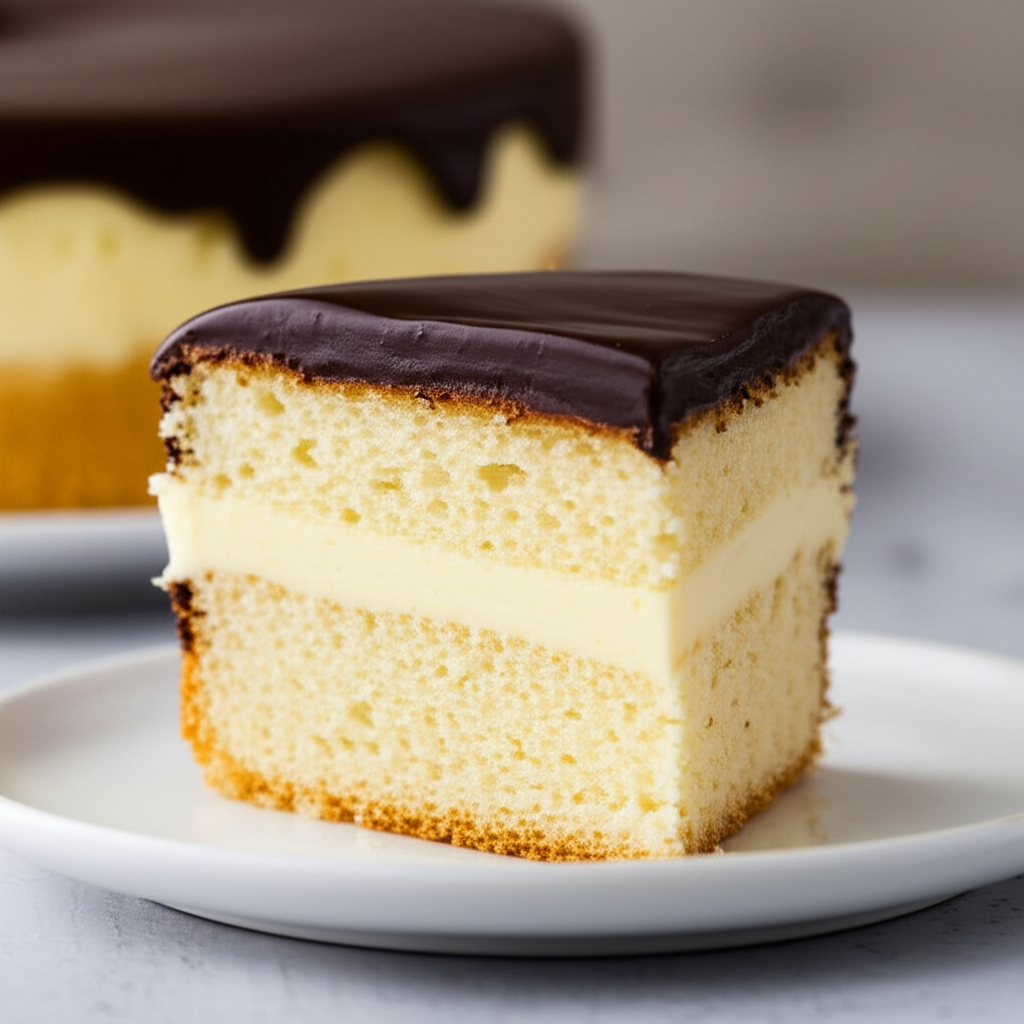
✨ The Boston Cream Pie: An American Classic, Reimagined with Grace & Wellness
There are certain dishes that are not merely food, but transportive experiences. They are woven into the very fabric of our culinary memory, speaking a language of nostalgia and comfort that transcends generations. For me, the Boston Cream Pie is one such culinary poem. I first encountered its true form not in Boston, but in a small patisserie in Lyon during my apprenticeship. A French chef, with a twinkle in his eye, presented his “gâteau de Boston” as a tribute to American ingenuity. He saw it not as a simple cake, but as a masterclass in textural contrast: the pillowy, ethereal sponge; the cool, silken river of pastry cream; and the dark, contemplative gloss of a proper chocolate glaze. It’s a dessert that demands a moment of quiet reflection. It’s not meant for a hurried bite on the go. Picture this: a late afternoon, the sun casting long, golden shadows across your kitchen. A pot of Earl Grey tea is steeping, its bergamot notes perfuming the air. You slice into the pie, the knife gliding effortlessly through the layers, revealing a perfect cross-section of its architecture. The first bite is a symphony—the tender crumb of the cake yielding to the rich, vanilla-kissed crème pâtissière, all enrobed in a bittersweet chocolate that coats the palate. This recipe is my homage to that memory, an elevation of the American classic born in the 1850s at Boston’s Parker House Hotel. We honor its history while infusing it with a modern wellness sensibility, proving that exquisite indulgence and mindful eating can, and should, beautifully coexist.
🛒 Ingredients
- For the Vanilla Sponge Cake (Genoise):
- 6 large pasture-raised eggs, at room temperature
- 200g (1 cup) organic cane sugar
- 2 teaspoons pure Madagascar vanilla extract or the seeds from one vanilla bean
- 1/2 teaspoon fine sea salt
- 200g (1 2/3 cups) all-purpose flour, sifted three times
- 60g (4 tablespoons) unsalted, grass-fed butter, melted and cooled
- Gourmet Substitution: Replace 30g of all-purpose flour with almond flour for a moister, more tender crumb.
- For the Silken Pastry Cream (Crème Pâtissière):
- 500ml (2 cups) whole organic milk
- 1 premium vanilla bean, split and scraped (or 2 tsp pure vanilla extract)
- 120g (1/2 cup + 2 tbsp) organic cane sugar, divided
- 6 large egg yolks from pasture-raised eggs
- 40g (1/3 cup) cornstarch, sifted
- 30g (2 tablespoons) unsalted, grass-fed butter, cold
- A pinch of fleur de sel
- Gourmet Substitution: For an even richer cream, substitute 120ml (1/2 cup) of the whole milk with heavy cream.
- For the Chocolate Glaze (Ganache):
- 180g (6 ounces) high-quality dark chocolate (70-75% cacao), finely chopped
- 180ml (3/4 cup) organic heavy cream
- 1 tablespoon light corn syrup or maple syrup (for shine)
- 1 tablespoon unsalted butter, at room temperature
- Gourmet Substitution: Use a single-origin chocolate, like a Madagascan or Ecuadorian, to introduce unique fruity or floral notes.
A Note on Key Ingredients:
- Pasture-Raised Eggs: The soul of this entire creation. The eggs are responsible for the lift in the sponge and the richness of the pastry cream. When eggs are at room temperature, they whip to a much greater volume, creating the light, airy texture we need for the Genoise sponge. Nutritionally, eggs from pasture-raised hens are higher in omega-3 fatty acids and Vitamin D, turning this dessert component into a powerhouse.
- High-Cacao Dark Chocolate (70%+): This is not the place for candy-like chocolate. A high-quality dark chocolate provides a sophisticated, bittersweet counterpoint to the sweet cream and cake. Its intensity is crucial for balance. Furthermore, it is rich in flavonoids, a class of antioxidants that support cardiovascular health and possess anti-inflammatory properties.
- Vanilla Bean: While extract is acceptable, a true vanilla bean imparts a depth and complexity of flavor that is unparalleled. The tiny black specks suspended in the pale pastry cream are a visual promise of the aromatic, floral, and creamy notes to come. It elevates the dessert from simply “sweet” to truly “aromatic.”
👨🍳 Instructions
-
Step 1: Master the Crème Pâtissière
The heart of our pie must be made first, as it requires several hours to chill and set completely. In a heavy-bottomed saucepan, gently heat the milk and the scraped vanilla bean (and its pod) until it just begins to steam and bubble at the edges. Do not let it boil. While the milk is warming, whisk the egg yolks and sugar together in a medium bowl until the mixture is pale yellow and has thickened—a stage chefs call the “ribbon stage.” Sift the cornstarch over the yolk mixture and whisk until smooth. Now, for a critical technique: tempering. Ladle about half a cup of the hot milk into the egg yolk mixture while whisking constantly. This gently raises the temperature of the eggs without scrambling them. Pour the tempered egg mixture back into the saucepan with the remaining milk. Cook over medium heat, whisking constantly and vigorously, especially in the corners of the pan, until the cream thickens to a custard-like consistency and begins to bubble. Let it bubble for one full minute to cook out the starch. Remove from the heat, discard the vanilla pod, and whisk in the cold butter and fleur de sel until fully incorporated. Strain the cream through a fine-mesh sieve into a shallow dish. Press a piece of plastic wrap directly onto the surface of the cream to prevent a skin from forming. Refrigerate for at least 4 hours, or until completely cold and firm. -
Step 2: Construct the Ethereal Sponge Cake
Preheat your oven to 350°F (175°C). Grease two 9-inch round cake pans and line the bottoms with parchment paper. In the bowl of a stand mixer fitted with the whisk attachment, combine the room-temperature eggs, sugar, vanilla, and salt. Beat on high speed for 10-15 minutes. This step is non-negotiable and is the secret to a light sponge. The mixture should become pale, triple in volume, and when you lift the whisk, the batter should fall back in a thick ribbon that sits on the surface for a few moments before dissolving. Sift one-third of the flour over the egg mixture and gently fold it in with a large spatula, using sweeping, under-and-over motions. Repeat with the remaining flour in two more additions. Be patient and gentle; you are folding, not stirring, to preserve the air you just whipped in. Finally, take a cup of the batter and fold it into your melted, cooled butter. Then, gently fold this butter-batter mixture back into the main batter. This technique prevents the heavy butter from sinking. Divide the batter evenly between the prepared pans and bake for 25-30 minutes, or until a wooden skewer inserted into the center comes out clean. Let the cakes cool in their pans for 10 minutes before inverting them onto a wire rack to cool completely. -
Step 3: Perfect the Luminous Chocolate Ganache
The ganache is the crown, and its texture is everything. Place your finely chopped dark chocolate in a heatproof bowl. In a small saucepan, heat the heavy cream and corn syrup just until it begins to simmer. Immediately pour the hot cream over the chopped chocolate. Do not stir. Let it sit for 5 minutes to allow the heat of the cream to melt the chocolate completely. Then, using a small whisk, start stirring in the center of the bowl, making small circles. As the chocolate and cream emulsify, the ganache will become glossy and smooth. Slowly widen your circles until the entire mixture is homogenous. Whisk in the room-temperature butter for extra shine and a smoother texture. Let the ganache cool at room temperature for about 15-20 minutes, until it has thickened slightly but is still pourable—the consistency of warm honey. -
Step 4: The Art of Assembly
This is where the components become a singular masterpiece. Once the cakes are fully cooled and the pastry cream is firm, you are ready. If your cake layers have domed, use a long serrated knife to carefully level the tops for a flat surface. Place one cake layer on your serving platter. Give your chilled pastry cream a vigorous whisk to loosen it back into a smooth, pipeable consistency. Transfer it to a piping bag or simply spread it evenly over the bottom cake layer, leaving a small half-inch border around the edge. Gently place the second cake layer on top, pressing down slightly to adhere it to the cream. Now, for the final touch. Slowly pour the slightly cooled ganache onto the center of the top cake layer. Use an offset spatula to gently guide the ganache over the top and encourage it to drip elegantly down the sides. Do not try to cover the sides completely; the beauty is in the natural, cascading drips. Place the entire assembled pie in the refrigerator for at least 30 minutes to an hour to allow the ganache to set.
🧪 Nutritional Analysis
- Serving Size: 1 slice (1/12th of pie)
- Calories: Approximately 480 kcal
- Protein: 8g
- Carbohydrates: 55g
- Fat: 25g (12g saturated)
- Fiber: 3g
- Sugar: 38g
- Sodium: 180mg
- Dietary Fit: This recipe is vegetarian. It is not inherently gluten-free or vegan, but substitutions can be made. For a gluten-free version, use a high-quality all-purpose gluten-free flour blend. For a dairy-free version, use oat milk and a vegan butter substitute in the cake and cream, and coconut cream in the ganache, though textures will vary slightly.
💚 Health Benefits
- Cognitive and Heart Support: The 70%+ dark chocolate is a potent source of flavanols, antioxidants known to improve blood flow to the brain and heart, potentially enhancing cognitive function and supporting cardiovascular health.
- High-Quality Protein for Satiety: The generous use of pasture-raised eggs provides high-quality, complete protein, which aids in muscle repair and contributes to a greater feeling of fullness and satisfaction, helping to manage appetite.
- Brain Health from Choline: Egg yolks are one of the richest dietary sources of choline, an essential nutrient that plays a vital role in brain development, memory, and regulating mood.
- Bone Strength: The use of whole milk in the pastry cream provides a good source of calcium and vitamin D, a duo that is critical for maintaining strong, healthy bones.
- Reduced Inflammation: Grass-fed butter, used in moderation, contains a better ratio of omega-3 to omega-6 fatty acids compared to conventional butter, which can contribute to reducing inflammation in the body.
- The Power of Mindful Indulgence: Taking the time to create and savor a beautifully crafted dessert like this one can be a form of mindfulness. This act of conscious enjoyment can lower stress hormones like cortisol and increase feelings of well-being, which is an integral part of a holistic wellness philosophy.
🌟 Final Thoughts from Chef Adam Jorive
In my kitchen, we chase flavor, but we also champion balance. A dish like the Boston Cream Pie serves as a beautiful reminder that indulgence is not the enemy of wellness. Rather, the path to a truly healthy relationship with food is paved with quality, intention, and joy. It is about choosing better ingredients—the darker chocolate, the pasture-raised eggs, the real vanilla bean—and taking the time to prepare them with care. This recipe is a blueprint, not a dogma. Feel free to play with it. Infuse the pastry cream with a hint of espresso or orange zest. Garnish the top with toasted slivered almonds for crunch. The goal is not just to replicate a dessert, but to create a moment. A moment of beauty on a plate, a moment of connection with a loved one, a moment of quiet celebration for yourself. Food, at its best, nourishes both the body and the soul. I hope this reimagined classic brings a touch of elegant, mindful joy to your table.