
“`html
✨ The Soul of America in a Bowl: A Chef’s Modern Take on Chicken and Dumplings
There are dishes that merely feed us, and then there are dishes that hold us. Chicken and Dumplings is firmly in the latter category. It is less a recipe and more a culinary anchor, a thread woven through the fabric of American history. Its origins are humble, born from the necessity and ingenuity of the Great Depression, a testament to making something magnificent from simple, accessible ingredients. But to dismiss it as mere ‘peasant food’ is to miss the profound artistry in its soul. For me, this dish is a sensory pilgrimage back to the heart of what matters: warmth, nourishment, and the quiet comfort of a shared meal.
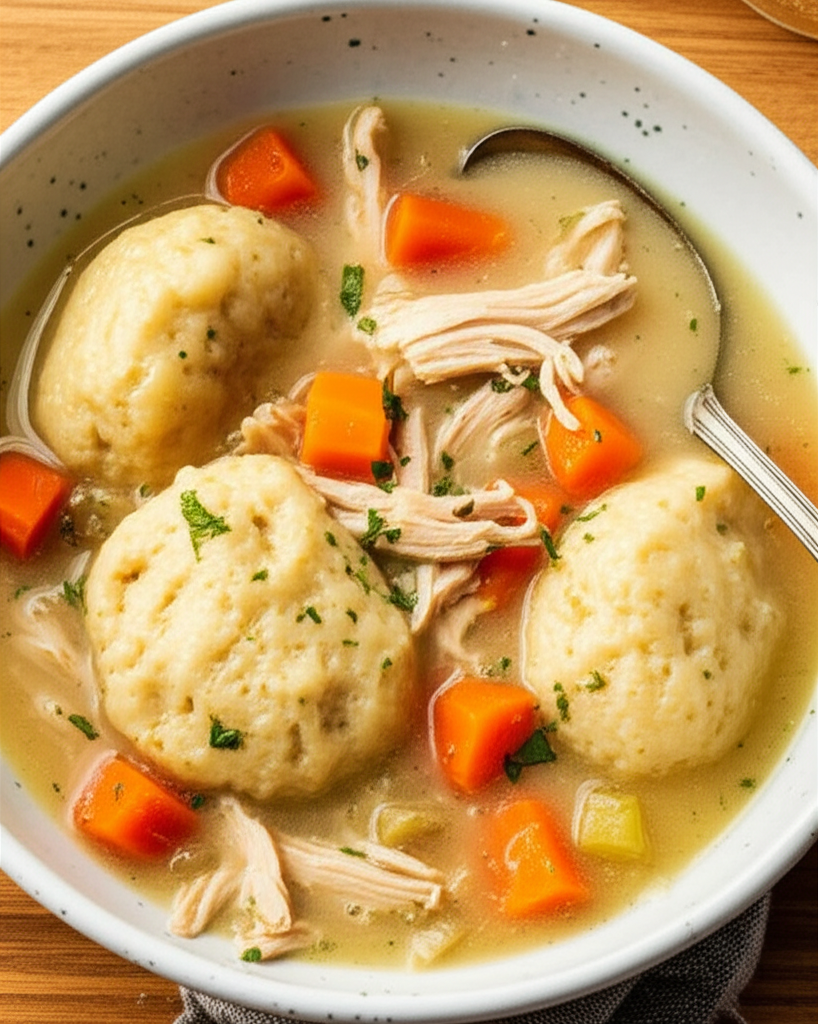
Imagine a cold, rain-swept evening. The world outside is a blur of gray, but inside, your kitchen is a sanctuary of golden light and enveloping aromas. The air is thick with the scent of slowly simmered chicken, the sweet earthiness of carrots and celery, and the haunting, herbaceous notes of thyme and bay leaf. This is the overture. The crescendo is the moment you lift the lid to reveal ethereal, pillowy dumplings, perfectly steamed and glistening atop a velvety, life-affirming broth. The first spoonful is a revelation—a silken texture that coats the palate, tender morsels of chicken that melt away, and dumplings that are at once substantial and light as a cloud. It’s a dish that commands you to slow down, to be present. It’s not a meal to be rushed, but rather an experience to be savored, preferably in a deep, comforting bowl, curled up in your favorite chair. This is not just food; it is a restorative ritual, a liquid embrace that nourishes body and spirit in equal measure. Today, we elevate this classic, infusing it with modern wellness principles without sacrificing an ounce of its nostalgic charm.
🛒 Ingredients
-
For the Chicken and Broth:
- 1 whole pasture-raised chicken (about 3.5 to 4 lbs), cut into 8 pieces (or 3 lbs bone-in, skin-on chicken thighs)
- 12 cups of filtered water or high-quality, low-sodium chicken bone broth
- 2 medium yellow onions, finely diced
- 3 large carrots, peeled and cut into a neat ½-inch dice
- 3 celery stalks, strings removed and cut into a neat ½-inch dice
- 4 cloves of garlic, lightly smashed
- 2 bay leaves
- 5-6 sprigs of fresh thyme
- 1 teaspoon whole black peppercorns
- 2 tablespoons of extra-virgin olive oil or avocado oil
- Sea salt and freshly cracked black pepper to taste
- Optional Gourmet Addition: A splash of dry white vermouth or sherry to deglaze the pot for an added layer of complexity.
-
For the Herbed Dumplings:
- 2 cups all-purpose flour (for lighter dumplings) or whole wheat pastry flour (for a nuttier, fiber-rich version)
- 1 tablespoon of baking powder
- 1 teaspoon of fine sea salt
- 2 tablespoons of finely chopped fresh parsley
- 1 tablespoon of finely chopped fresh chives
- 4 tablespoons of cold, unsalted butter, cubed
- ¾ cup of whole milk or buttermilk, plus more if needed
A Closer Look at Our Key Ingredients:
- Pasture-Raised Chicken: This is the cornerstone of the dish. Unlike its conventionally raised counterparts, a pasture-raised bird has had a life roaming and foraging, which develops a deeper, more complex flavor in the meat and a higher concentration of beneficial omega-3 fatty acids and Vitamin E. The bones are also richer in collagen, which will create a more luscious, healthful broth.
- The Mirepoix (Onion, Carrot, Celery): In culinary arts, we call this the holy trinity of aromatic vegetables. It’s not just a collection of vegetables; it is the fundamental flavor base of countless sauces, stocks, and soups. A precisely cut, slowly softened mirepoix doesn’t just add flavor; it builds a foundational sweetness and depth that elevates the entire dish from a simple soup to a culinary composition.
- Fresh Thyme and Bay Leaf: These are the soul of our broth. While dried herbs have their place, the essential oils in fresh thyme release a gentle, pine-like, and floral aroma that permeates the liquid. The bay leaf contributes a subtle, almost tea-like background note that adds an unspoken complexity, rounding out the flavors and making the broth taste complete.
👨🍳 Instructions
-
Step 1: Building the Aromatic Foundation & Poaching the Chicken
The first act of our culinary play is to build flavor from the ground up. Place a large, heavy-bottomed pot or Dutch oven over medium heat. Add the olive oil. Once it shimmers, add your finely diced onion, carrot, and celery (the mirepoix). Season generously with salt and pepper. This is crucial—salting at this stage helps the vegetables release their moisture and soften without browning. Sauté for 8-10 minutes, stirring occasionally, until they are beautifully soft and aromatic. Your kitchen should be filled with a sweet, earthy perfume. Do not rush this step. Add the smashed garlic cloves and cook for another minute until fragrant. If using, pour in the splash of vermouth and scrape up any browned bits (fond) from the bottom of the pot. Place the chicken pieces into the pot, nestling them amongst the vegetables. Add the thyme sprigs, bay leaves, and whole peppercorns. Pour in the water or bone broth, ensuring the chicken is fully submerged. Bring the liquid to a very gentle simmer—do not boil. A rolling boil will agitate the proteins and result in tough, rubbery chicken. Reduce the heat to low, cover partially, and let it poach gently for 45-60 minutes, or until the chicken is cooked through and tender. Skim any foam that rises to the surface during the first 10 minutes for a cleaner, clearer broth.
-
Step 2: Enriching the Broth & Preparing the Star Protein
Once the chicken is fall-off-the-bone tender, carefully remove the pieces from the pot and set them on a cutting board to cool slightly. Strain the broth through a fine-mesh sieve into a large bowl or another pot, discarding the cooked-down vegetables, herbs, and peppercorns. This step is the secret to a refined, restaurant-quality clear broth. Return the strained, golden liquid to your Dutch oven. Taste and adjust the seasoning with salt and pepper. It should taste delicious on its own. Bring it to a gentle simmer. While the broth is reheating, shred the chicken meat from the bones, discarding the skin, bones, and any cartilage. You can use two forks or your fingers for a more rustic texture. Add the beautiful, shredded chicken back into your simmering broth.
-
Step 3: Crafting the Ethereal Dumplings
The success of a dumpling lies in a light hand. In a medium bowl, whisk together the flour, baking powder, salt, and fresh herbs. Add the cubes of cold butter. Using your fingertips or a pastry cutter, work the butter into the flour until the mixture resembles coarse breadcrumbs. Now, create a well in the center and pour in the buttermilk or milk. Using a fork, gently mix until a soft, slightly sticky dough forms. The cardinal rule: do not overmix! Overworking the dough develops gluten, which will lead to tough, dense dumplings instead of the light, fluffy clouds we are seeking. The dough should just come together.
-
Step 4: The Final Simmer & The Magic of Steam
Ensure your chicken and broth are at a steady, gentle simmer, not a rolling boil. Using two spoons or a small cookie scoop, drop rounded tablespoons of the dumpling dough directly onto the surface of the simmering broth. Space them out as they will expand. Once all the dough is in the pot, immediately cover it with a tight-fitting lid. Reduce the heat to low and let the dumplings steam for 12-15 minutes. Do not lift the lid during this process! The trapped steam is what cooks the dumplings through and makes them puff up beautifully. Lifting the lid releases the steam and can cause them to become heavy and doughy. After 15 minutes, lift the lid. The dumplings should be plump, firm to the touch, and cooked through. To test one, you can remove it and cut it in half—it should be light and airy inside, with no raw dough. Let the dish rest, off the heat, for 5 minutes before serving.
-
Step 5: Plating the Masterpiece
To serve, use a ladle to spoon a generous amount of the shredded chicken, vegetables (if you added fresh ones), and luscious broth into a wide, shallow bowl. This presentation allows the elements to be seen and appreciated. Carefully arrange 3-4 dumplings on top. Garnish with a final flourish of fresh, finely chopped parsley or delicate dill fronds and a few cracks of black pepper. For a final touch of elegance, a drizzle of herbaceous, high-quality olive oil over the top can add a peppery finish and a beautiful sheen. Serve immediately, and watch as the world melts away with each spoonful.
🧪 Nutritional Analysis
- Calories per serving: ~520 kcal
- Protein: ~40g
- Carbohydrates: ~45g
- Fat: ~20g
- Fiber: ~5g
- Sugar: ~6g
- Sodium: ~600mg (varies based on broth and added salt)
- *(Approximate values per serving, based on 6 servings. May vary based on specific ingredients and portion sizes used.)*
- Dietary Notes: This recipe can be adapted for gluten-free diets by substituting the all-purpose flour in the dumplings with a high-quality measure-for-measure gluten-free baking blend.
💚 Health Benefits
- Immune-Supportive Elixir: The hot broth contains chicken-derived compounds like carnosine and the amino acid cysteine, which have been studied for their ability to help reduce inflammation in the upper respiratory tract and ease cold symptoms.
- Rich in Collagen and Gelatin: By simmering bone-in chicken, the broth becomes a rich source of collagen and gelatin. These proteins are vital for supporting joint health, strengthening the gut lining, and promoting healthy skin, hair, and nails.
- High-Quality Lean Protein: Pasture-raised chicken provides an excellent source of complete protein, essential for muscle repair, maintaining metabolic health, and ensuring you feel satiated and energized after your meal.
- Source of B-Vitamins: Chicken is rich in B vitamins, particularly niacin (B3) and pyridoxine (B6), which are crucial for energy metabolism, brain function, and the creation of red blood cells.
- Antioxidant Power from Vegetables & Herbs: The mirepoix and fresh herbs are not just for flavor; they deliver a potent dose of antioxidants, such as quercetin from onions and beta-carotene from carrots, which help combat cellular damage from free radicals.
- Gentle on Digestion: A well-made chicken and dumpling soup is a nourishing, easily digestible meal. The warm broth soothes the digestive tract, making it an ideal restorative food when you’re feeling under the weather or in need of gentle nourishment.
🌟 Final Thoughts from Chef Adam Jorive
In our modern pursuit of wellness, we sometimes forget that nourishment is a multifaceted concept. It is not always about restriction or chasing the latest superfood. Sometimes, the most profound act of self-care is to embrace a dish that feels like a hug from the inside out. This rendition of Chicken and Dumplings is my love letter to that idea. It honors its humble, soulful roots while elevating it with higher-quality ingredients and refined techniques that amplify both its flavor and its health benefits. Don’t be afraid to make it your own. Add parsnips or leeks to the broth for a different sweetness. Fold a pinch of lemon zest into your dumpling dough for a bright, surprising citrus note. The kitchen is your canvas, and this recipe is a beautiful, forgiving template. It proves that comfort and wellness are not opposing forces; in a thoughtful kitchen, they can dance together in perfect harmony, creating something truly beautiful, delicious, and deeply good for you.
Yours in wellness and flavor,
Chef Adam Jorive
“`