
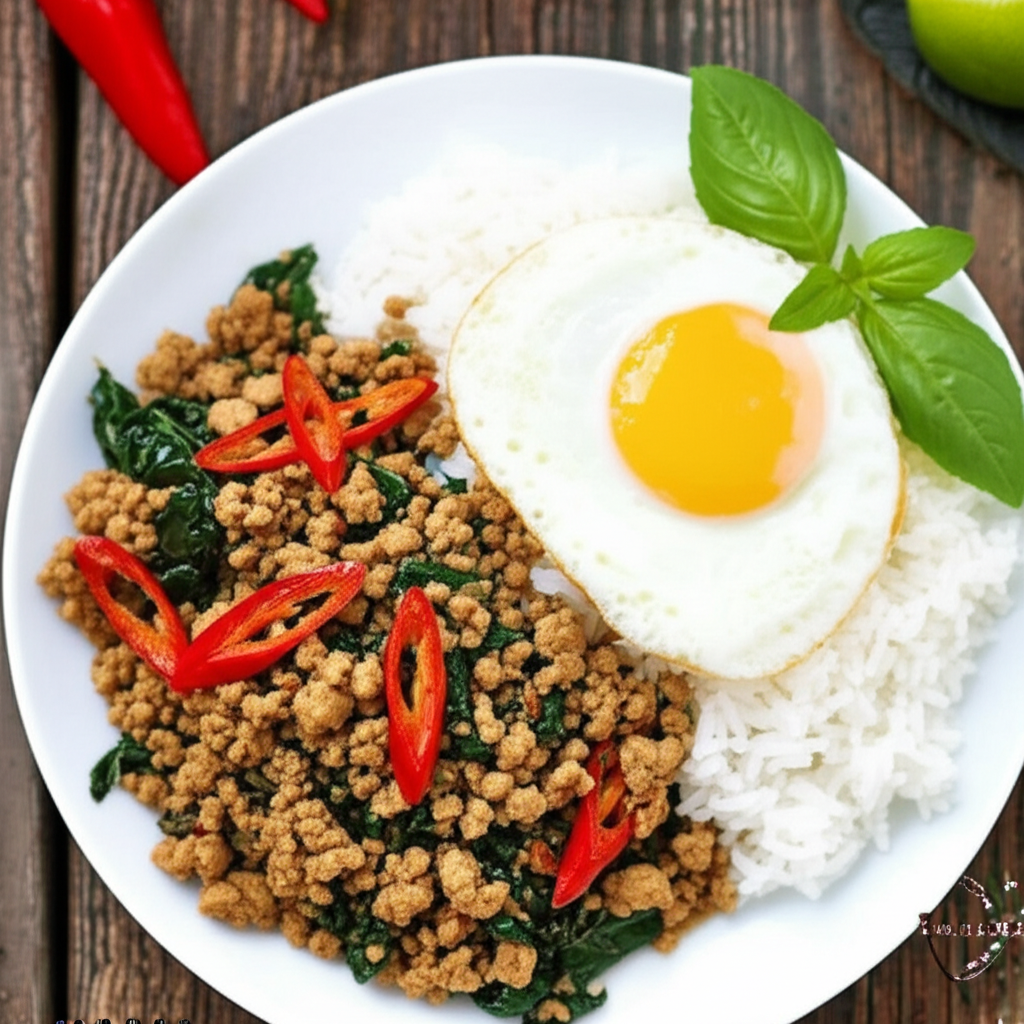
✨ The Soul of Bangkok on a Plate: Crafting the Perfect Thai Basil Chicken (Pad Krapow Gai)
There are dishes that merely feed the body, and then there are dishes that capture the very soul of a place. For me, Thai Basil Chicken, or Pad Krapow Gai, is the latter. It is the exhilarating, untamed pulse of Bangkok bottled into a single, explosive culinary experience. To understand this dish is to understand the beautiful chaos of a Thai street market at midday. Close your eyes and imagine it: the percussive clang of a metal spatula against a seasoned wok, the hiss of chicken meeting searing-hot oil, and the intoxicating perfume of garlic, chili, and holy basil blooming in the humid air. This isn’t just a recipe; it’s a sensory memory, a flavor postcard from the heart of Thailand.
Pad Krapow Gai is, at its core, a humble dish of the people, often whipped up in minutes as a quick, satisfying lunch. Yet, its simplicity is deceptive. The magic lies in the breathtaking balancing act of its core flavors: the sharp, clean fire of bird’s eye chilies, the profound, savory depth of fish sauce, the subtle sweetness of palm sugar, and, of course, the star of the show—the peppery, anise-like, almost mystical aroma of holy basil, or krapow. When crafted with intention, this dish transcends its humble origins, becoming a testament to how a few perfect ingredients can create a symphony of flavor. Served over a mound of fragrant jasmine rice and crowned with a crispy-edged, runny-yolked fried egg (kai dao), each bite is a journey—a dance of heat, umami, and fresh, herbaceous notes that is both comforting and electrifying. This is the food I seek out, the food I love to create: honest, vibrant, and deeply nourishing to both body and spirit.
🛒 Ingredients
- For the Chicken: 1 lb (about 450g) boneless, skinless chicken thighs, finely minced by hand (see Chef’s Tip)
- Aromatics: 8–10 cloves of garlic, peeled; 5–15 fresh Thai bird’s eye chilies (prik kee noo), to your heat preference
- The Basil: 2 packed cups of fresh holy basil leaves (bai krapow), stems discarded
- The Sauce: 1.5 tablespoons premium oyster sauce, 1 tablespoon high-quality fish sauce (nam pla), 1 teaspoon dark soy sauce (for color), 1 teaspoon coconut sugar or palm sugar
- For Cooking: 2 tablespoons neutral oil with a high smoke point, like avocado or rice bran oil
- For Serving: 4 cups cooked jasmine rice, 4 large eggs for frying
Gourmet Notes & Substitutions:
- The Protein: While chicken (Gai) is classic, this dish is magnificent with ground pork (Moo), finely sliced beef, or even prawns. For a sublime vegetarian version, use a combination of firm tofu (crumbled) and finely diced shiitake or oyster mushrooms.
- The Basil: Holy basil (krapow) is essential for authenticity due to its unique peppery flavor. It can be found at most Asian markets. In a pinch, you may substitute Thai sweet basil (horapa), but know that it will yield a sweeter, more anise-forward flavor profile. Avoid using Italian basil.
- The Sweetener: Using coconut or palm sugar provides a more complex, caramel-like sweetness than refined white sugar, adding another layer of depth to the sauce.
A Deeper Look at Key Ingredients:
- Holy Basil (Bai Krapow): This is not merely an herb; it is the identity of the dish. Unlike its sweet cousin, holy basil possesses a pungent, spicy, and slightly clove-like fragrance that intensifies with heat. In Ayurvedic traditions, it’s known as Tulsi and is revered as an adaptogen, believed to help the body combat stress. Its role here is to provide that signature, final burst of aromatic freshness that cuts through the richness of the sauce.
- Fish Sauce (Nam Pla): The salt and soul of Southeast Asian cuisine. A good fish sauce is not just salty; it is a carrier of profound umami, a savory depth forged through the fermentation of anchovies and salt. It provides a foundational flavor that cannot be replicated. I implore you to invest in a high-quality, first-press brand—the difference in taste is night and day.
- Hand-Minced Chicken: While pre-ground chicken is convenient, taking a few extra minutes to mince chicken thighs by hand with a sharp chef’s knife or cleaver will revolutionize the texture of your dish. This technique creates a more varied, tender, and succulent consistency that absorbs the sauce beautifully, a world away from the often pasty texture of machine-ground meat.
👨🍳 Instructions
-
Mise en Place: The Art of Preparation
In the world of high-heat, rapid-fire cooking like this, preparation is not a step; it is the step. Begin by mincing your chicken thighs. Slice them into thin strips, then cut crosswise into a small dice, and finally, run your knife through the pile until it resembles coarse ground meat. Next, prepare the aromatics. Using a stone mortar and pestle—the traditional and most effective method—pound the garlic and bird’s eye chilies together into a coarse, fragrant paste. This ruptures the cell walls, releasing more flavor than simple chopping. If you don’t have one, mincing them very finely together with a knife is a good alternative. In a small bowl, whisk together your oyster sauce, fish sauce, dark soy sauce, and coconut sugar. Pluck the holy basil leaves from their stems and have them ready. Your wok station should now be set: oil, aromatic paste, minced chicken, sauce mixture, and basil leaves, all within arm’s reach. Success here is born from readiness. -
Awakening the Aromatics
Place a seasoned wok or a large, heavy-bottomed skillet over high heat. Let it get truly hot—you should feel the heat radiating from the surface. Add your neutral oil. Once it shimmers (just before it smokes), add the garlic and chili paste. Stir-fry vigorously for about 15–20 seconds. The goal here is not to brown or burn the garlic, but to instantly perfume the oil and fill your kitchen with that unmistakable, appetite-inducing fragrance. This initial bloom of aroma is the foundational layer upon which the entire dish is built. -
The Sizzle and the Sear
Immediately add the hand-minced chicken to the wok. Spread it across the hot surface and let it sear for about 30 seconds without moving it. This creates a beautiful crust and prevents the chicken from boiling in its own juices. Now, begin stir-frying, using your spatula to break up the mince into small, individual pieces. Continue to cook, tossing constantly, for about 2–3 minutes, until the chicken is almost cooked through and no longer pink. The high heat of the wok is your greatest tool here, ensuring each morsel is seared and tender. -
Building the Symphony of Sauce
Pour the prepared sauce mixture over the chicken. Continue to stir-fry, ensuring every piece of chicken is coated. The liquid will bubble and sizzle as it hits the hot wok. Cook for another 1–2 minutes, allowing the sugars in the sauce to caramelize slightly and the sauce to thicken and cling beautifully to the chicken. The color will deepen to a rich, glossy brown, and the aroma will become complex and savory. Taste a small piece and adjust if necessary—a little more fish sauce for salt, or a touch more sugar for balance. The perfect sauce should be a harmonious collision of savory, sweet, and spicy. -
The Final Flourish & The Crown Jewel (Kai Dao)
This is the most critical moment. Turn off the heat completely. Immediately add the two packed cups of holy basil leaves to the wok. Toss gently but quickly for about 15–20 seconds, just until the leaves are wilted but still vibrant green. The residual heat is all that’s needed; overcooking the basil will destroy its delicate, peppery oils. For the kai dao (fried egg), heat about a half-inch of oil in a small pan over medium-high heat. When hot, crack an egg into the oil. It should bubble furiously. Spoon some of the hot oil over the white to help it set, leaving the yolk perfectly runny. The edges should be golden brown and gloriously crispy. Serve the Pad Krapow Gai immediately over a bed of warm jasmine rice, topped with the fried egg.
🧪 Nutritional Analysis
(Approximate values per serving, assuming 4 servings, including ¼ cup uncooked rice and 1 egg per person)
- Calories: ~520 kcal
- Protein: ~35g
- Carbohydrates: ~45g
- Fat: ~22g
- Fiber: ~3g
- Sugar: ~4g
- Sodium: ~1100mg (This can be high; using low-sodium soy/fish sauce can reduce it.)
Dietary Adaptability: This dish can be easily adapted. Use gluten-free tamari and oyster sauce to make it gluten-free. For a low-carb or paleo-friendly meal, serve it over cauliflower rice or sautéed greens instead of jasmine rice.
💚 Health Benefits
- Adaptogenic Support: The star ingredient, holy basil (Tulsi), is a celebrated adaptogen. This means it may help the body more effectively manage physical and mental stress, promoting a sense of balance and well-being.
- Metabolism & Anti-Inflammatory Boost: The capsaicin found in bird’s eye chilies is a powerful compound known to provide a temporary boost to the metabolism. It also exhibits potent anti-inflammatory properties, supporting circulatory health.
- Muscle Repair and Satiety: Chicken thighs are a fantastic source of high-quality protein, crucial for repairing tissues, building lean muscle, and promoting a feeling of fullness that helps regulate appetite.
- Immune-Supporting Aromatics: Garlic contains allicin, a compound released when crushed or chopped, which has been studied for its antimicrobial, antiviral, and heart-protective benefits, making it a powerful ally for the immune system.
- Mindful Energy Source: When served with traditional jasmine rice, this dish provides the necessary complex carbohydrates for sustained physical and mental energy, fueling your day without the crash associated with simple sugars.
- Digestive Aid: Both garlic and high-quality, fermented fish sauce can contribute positively to gut health. Garlic acts as a prebiotic, feeding good gut bacteria, while fermented foods can introduce beneficial enzymes.
🌟 Final Thoughts from Chef Adam Jorive
Pad Krapow Gai is a beautiful paradox. It is lightning-fast to cook, yet its flavors are profoundly deep and layered. It is born from the streets, yet it is elegant enough for any discerning palate. This, for me, is the essence of truly great food. It tells a story, evokes a feeling, and nourishes on multiple levels. I urge you not to be intimidated by the heat of the wok or the pungency of the ingredients. Embrace them. This recipe is a blueprint, a starting point for your own culinary conversation. Adjust the chilies to your liking, discover the difference hand-minced chicken makes, and experiment with pork or mushrooms. The kitchen should be a place of joyful discovery, not rigid rules.
Ultimately, a life well-lived is about finding the perfect balance—between discipline and indulgence, between tradition and innovation, between nourishing your body and delighting your senses. This humble plate of Thai Basil Chicken, crowned with its perfect egg, is a delicious reminder of that beautiful equilibrium. Cook with passion, eat with mindfulness, and share with love.