
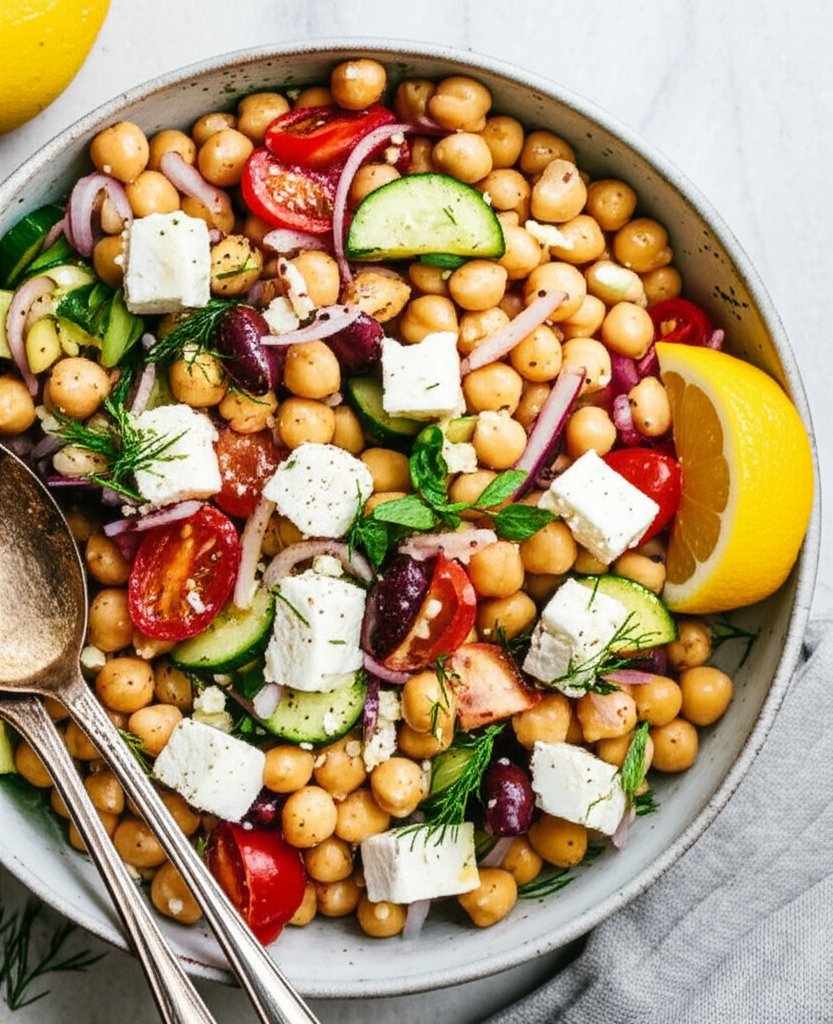
✨ World Flavors: An Aegean Ode to Sunshine in a Bowl – My Greek Chickpea Salad
There are certain flavors that are not merely tasted, but felt—they are a memory, a sunbeam, a whisper of a distant shore. For me, this Greek Chickpea Salad is pure sensory teleportation. I remember my first true encounter with its essence, not in a bustling Athens taverna, but on the quiet, wind-swept island of Folegandros. I was seated at a simple wooden table overlooking the caldera, the Aegean Sea a brilliant, impossible blue below. The air was thick with the scent of wild oregano and salt. A woman with hands weathered by time and tradition brought out a humble bowl, unadorned yet radiating life. It wasn’t a complex dish, but it was perfect. The earthy chickpeas, the bright, salty burst of feta, the crisp, cooling cucumber, and the sharp, verdant ribbon of olive oil—it was the island on a plate. It was a lesson in the profound elegance of simplicity. This dish, my rendition of that memory, is more than a recipe; it’s an invitation. It’s an invitation to slow down, to appreciate the integrity of each ingredient, and to find a moment of sun-drenched peace in your own kitchen. It’s a culinary narrative of a place where wellness is not a trend, but a way of life woven into the very fabric of every meal. It embodies a philosophy I hold dear: that the most nourishing food is often the most honest, celebrating the earth’s gifts in their purest form.
🛒 Ingredients
- For the Salad:
- 2 (15-ounce) cans of high-quality chickpeas (garbanzo beans), rinsed and drained thoroughly
- 1 large English cucumber, partially peeled and finely diced
- 1 red bell pepper, core and seeds removed, finely diced
- 1/2 large red onion, very finely diced
- 1 cup cherry or grape tomatoes, halved or quartered
- 1 cup crumbled authentic Greek Feta cheese (preferably sheep’s milk, stored in brine)
- 1/2 cup pitted Kalamata olives, roughly chopped (optional, but highly recommended)
- 1/2 cup fresh flat-leaf parsley, finely chopped
- 1/4 cup fresh mint leaves, finely chopped
- Gourmet Addition: A tablespoon of briny capers, rinsed, or a handful of toasted pine nuts for texture.
- For the Lemon-Oregano Vinaigrette:
- 1/2 cup extra virgin olive oil (a robust, peppery Greek Koroneiki is sublime here)
- 1/4 cup freshly squeezed lemon juice (from about 2 lemons)
- 1 tablespoon red wine vinegar
- 2 cloves garlic, minced to a paste with a pinch of salt
- 1 teaspoon dried Greek oregano
- 1/2 teaspoon Dijon mustard (for emulsification)
- Freshly ground black pepper and sea salt to taste
A Note on Key Ingredients:
- Authentic Greek Feta: Please, seek out the real thing. True Greek Feta, a PDO (Protected Designation of Origin) product, is made from sheep’s milk or a blend with up to 30% goat’s milk. Its character is chalky yet creamy, with a complex tang and salinity that cow’s milk feta simply cannot replicate. It’s the salty, briny soul of this salad.
- Extra Virgin Olive Oil: I consider this the lifeblood of Mediterranean cooking. For a salad this pure, you want an oil that speaks. A high-quality, cold-pressed EVOO isn’t just a fat; it’s a seasoning. Its grassy, peppery notes will drape over every ingredient, uniting them while adding its own distinct voice and a host of anti-inflammatory polyphenols.
- The Chickpea: The humble hero. Chickpeas provide a hearty, satisfying base and a wonderful, creamy texture that contrasts with the crisp vegetables. They are a powerhouse of plant-based protein and dietary fiber, making this salad not just a side dish, but a truly fulfilling meal that nourishes from within. Using canned chickpeas is a wonderful convenience, but if you have the time, starting with dried chickpeas and cooking them from scratch will yield a superior texture and flavor.
👨🍳 Instructions
-
Step 1: The Foundation – Perfecting the Components
Begin with your chickpeas. Even after rinsing, they hold moisture. For a salad that sings rather than slumps, texture is paramount. Spread the rinsed and drained chickpeas on a clean kitchen towel or paper towels and gently pat them dry. Allow them to air-dry for a few minutes. This small step is a non-negotiable in my kitchen; it ensures the vinaigrette clings to the chickpeas rather than being diluted. While they dry, dedicate yourself to the art of the knife. For the cucumber, I like to create a “striped” effect by peeling alternating strips of the skin; it adds visual appeal and a pleasant textural variance. To prevent a watery salad, slice it lengthwise and use a small spoon to gently scrape out the seed core before dicing. Your goal for the cucumber, bell pepper, and red onion is a consistent, fine dice (about 1/4-inch). This isn’t just for aesthetics; it guarantees that each spoonful is a balanced mosaic of flavor—a little sweet, a little sharp, a little cool. Halve or quarter your tomatoes depending on their size. -
Step 2: The Elixir – Crafting the Vinaigrette
A great vinaigrette is a study in balance. In a small bowl or liquid measuring cup, combine the finely minced garlic paste, fresh lemon juice, red wine vinegar, Dijon mustard, dried oregano, and a generous pinch of salt and pepper. Whisk vigorously until combined. Now, for the emulsification—the magic that creates a creamy, unified dressing. While whisking constantly, begin adding the extra virgin olive oil in a very slow, steady stream. You will see the mixture thicken and become cohesive. This technique, known as emulsifying, prevents the dressing from separating. Once all the oil is incorporated, taste it. This is the most crucial moment. Does it need more salt to amplify the flavors? A touch more lemon to brighten it? Trust your palate. A chef’s greatest tool is their sense of taste. The perfect dressing should be bright, zesty, and boldly seasoned—it needs to be strong enough to stand up to and season all the other ingredients. -
Step 3: The Symphony of Assembly
In a large, beautiful serving bowl, combine your meticulously prepared chickpeas, diced cucumber, bell pepper, red onion, and tomatoes. If using, add the chopped Kalamata olives now. Pour about two-thirds of your vibrant vinaigrette over the mixture. Gently fold everything together with a large spoon or spatula. You want to coat every ingredient without bruising the vegetables. Now, pause. Let the salad sit at room temperature for at least 15-20 minutes. This marination period is essential. It allows the chickpeas and vegetables to absorb the bright flavors of the dressing, transforming from a collection of individual parts into a harmonious whole. -
Step 4: The Final Flourish – Adding the Grace Notes
Timing is everything with delicate ingredients. Just before serving, add the final components. Gently fold in the crumbled feta cheese, the finely chopped parsley, and the fresh mint. These are your grace notes. Adding them at the end preserves the feta’s texture and prevents the fresh herbs from wilting and turning dark. Give the salad one last gentle toss, adding the remaining vinaigrette if you feel it needs it. Your goal is a salad that is well-dressed but not drowning. -
Step 5: Plating and Presentation
To serve, transfer the salad to a clean, elegant platter or individual bowls. The eye eats first. Create a small mound in the center. Garnish with a few whole mint or parsley leaves, an extra crumble of feta, and a final, luxurious drizzle of your best extra virgin olive oil over the top. A final crack of black pepper is the perfect punctuation mark. Serve immediately to enjoy the perfect contrast between the crisp, cool vegetables and the flavor-infused chickpeas. This salad is a masterpiece at room temperature.
🧪 Nutritional Analysis
- Serving Size: Approximately 1.5 cups
- Calories: Approx. 380 kcal
- Protein: Approx. 14g
- Carbohydrates: Approx. 35g
- Fat: Approx. 20g (primarily healthy monounsaturated fats)
- Fiber: Approx. 10g
- Sugar: Approx. 6g (naturally occurring from vegetables)
- Sodium: Approx. 450mg (will vary based on feta and added salt)
- Dietary Information: This recipe is naturally gluten-free and vegetarian. To make it vegan and dairy-free, simply substitute the feta cheese with a high-quality, almond or tofu-based vegan feta, or omit it and add a tablespoon of nutritional yeast to the dressing for a savory, cheesy note.
💚 Health Benefits
- Sustained Energy & Digestive Health: The chickpeas are an exceptional source of plant-based protein and soluble fiber, which helps to stabilize blood sugar levels, provide lasting energy, and promote a healthy gut microbiome.
- Heart-Healthy Powerhouse: Extra virgin olive oil is rich in monounsaturated fats and oleocanthal, a polyphenol with potent anti-inflammatory properties, both of which are celebrated for their role in supporting cardiovascular health.
- Immune System Support: The vibrant combination of lemon juice (Vitamin C), red bell peppers (rich in Vitamin C and A), and garlic (containing allicin) creates a potent blend of antioxidants that help bolster the body’s natural defenses.
- Cellular Protection: The array of colorful vegetables, fresh herbs, and Kalamata olives provides a wide spectrum of phytonutrients and antioxidants that work to combat oxidative stress and protect cells from damage.
- Bone Strength & Hydration: Feta cheese offers a good source of calcium, crucial for bone density, while the high water content of cucumber and tomatoes contributes to overall hydration, which is essential for every bodily function.
- Anti-Inflammatory Properties: Beyond the olive oil, the quercetin in red onions and the potent compounds in fresh herbs and garlic contribute to an overall anti-inflammatory effect, supporting a state of wellness and vitality.
🌟 Final Thoughts from Chef Adam Jorive
In the culinary world, we often chase complexity, searching for the next novel technique or exotic ingredient. Yet, dishes like this Greek Chickpea Salad serve as a beautiful, grounding reminder that true elegance lies in purity and harmony. It’s a testament to the idea that food can be both deeply pleasurable and profoundly nourishing. This recipe is a blueprint, not a dogma. I encourage you to see it as a starting point for your own culinary story. Perhaps you’ll add sun-dried tomatoes for a deeper, sweeter note, or a handful of toasted walnuts for an earthy crunch. Maybe you’ll swap the mint for dill, lending it a different kind of freshness. The kitchen should be a place of joyful exploration. What matters most is the intention you bring to it—the respect for the ingredients, the care in your preparation, and the joy in sharing the final creation. Find the balance between beauty, wellness, and flavor that feels right to you, and you will have captured the true spirit of the Aegean in your own bowl.