
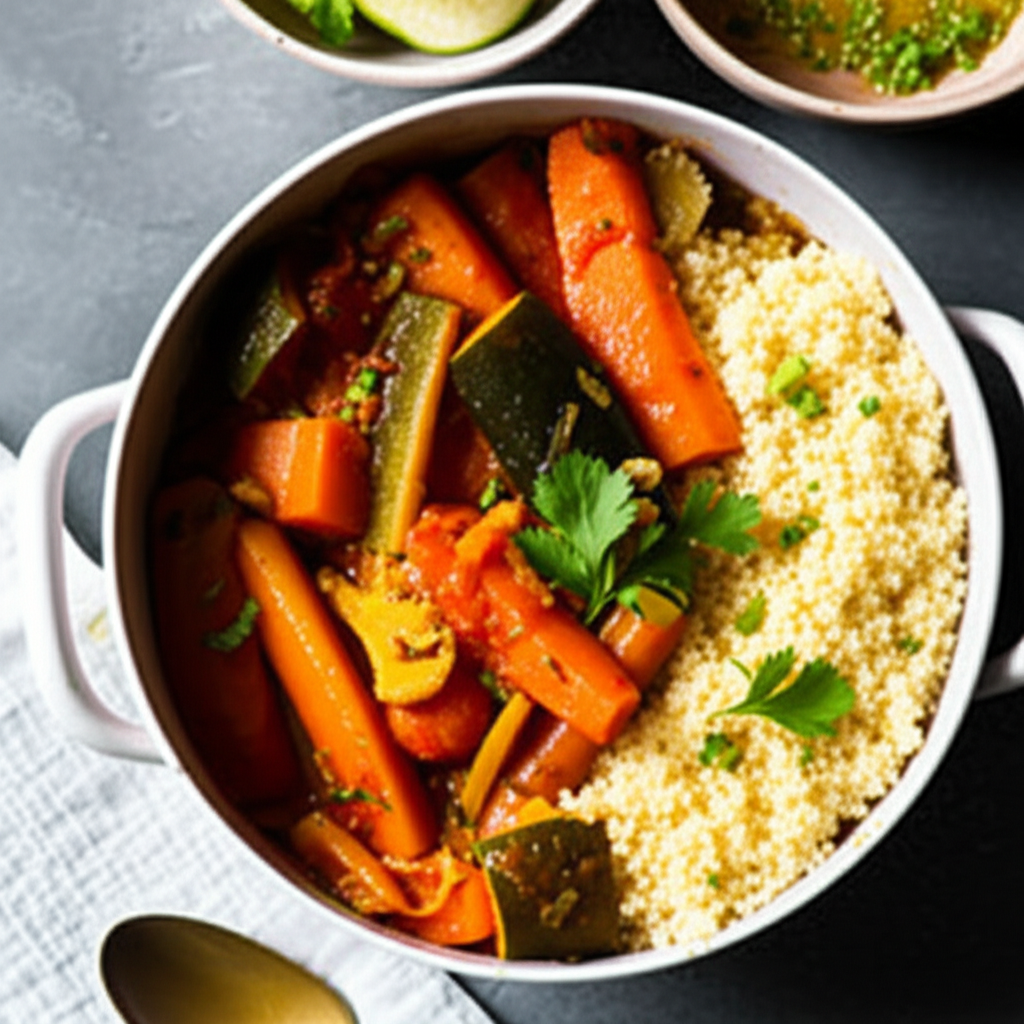
✨ A Sun-Drenched Journey to Marrakech: My Vibrant Vegetarian Tagine
There are some dishes that do more than just feed us; they transport us. They are a passport, stamped with the flavors and aromas of a distant land. For me, the Moroccan Tagine is one such culinary teleportation. I first experienced its magic not in a pristine, white-tiled kitchen, but amidst the beautiful, organized chaos of a Marrakech souk. The air, thick with the scent of cumin, cinnamon, and roasting meats, was punctuated by the sharp, alluring fragrance of mint tea. Tucked away in a quiet riad, I was served a tagine that was a revelation. It wasn’t just a stew; it was a slow-cooked tapestry of sweet, savory, earthy, and fragrant notes, all harmonizing under the conical lid of its earthenware vessel. The steam that billowed out upon its reveal was a fragrant cloud of promises fulfilled. This vegetarian rendition is my love letter to that memory—a dish designed to capture the soul of Morocco while nourishing the body with intention and grace. It’s a symphony of textures: the yielding tenderness of slow-cooked root vegetables, the creamy pop of chickpeas, the jammy sweetness of apricots, and the bright, floral-salty punctuation of preserved lemon. This is not a meal to be rushed. It is an invitation to slow down, to savor the alchemy of spices, and to gather loved ones around a table for a shared experience that is both grounding and utterly transcendent. It’s the kind of food that warms you from the inside out, a culinary hug from the sun-drenched heart of North Africa.
🛒 Ingredients
- For the Tagine:
- 2 tablespoons extra-virgin olive oil, preferably a robust, fruity variety
- 2 large yellow onions, finely diced
- 4-5 cloves garlic, minced
- 1 tablespoon fresh ginger, grated to a fine pulp
- 2 large carrots, peeled and sliced into 1/2-inch thick rounds
- 2 medium sweet potatoes (about 1 lb), peeled and cut into 1-inch cubes
- 1 medium zucchini, cut into 1-inch chunks
- 1 (15-ounce) can chickpeas, rinsed and drained
- 1 (28-ounce) can crushed tomatoes (San Marzano for superior sweetness)
- 4 cups vegetable broth, low-sodium
- 1/2 cup dried apricots, halved (or Medjool dates, pitted and halved)
- 1/4 cup chopped preserved lemon rind (about 1 whole preserved lemon), pulp discarded
- 1 cinnamon stick
-
Ras el Hanout Spice Blend:
- 2 teaspoons ground cumin
- 2 teaspoons ground coriander
- 1 teaspoon ground turmeric
- 1 teaspoon sweet paprika
- 1/2 teaspoon ground cinnamon
- 1/2 teaspoon ground black pepper
- 1/4 teaspoon ground cloves
- A pinch of cayenne pepper or red pepper flakes (optional, for warmth)
- For the Couscous & Garnish:
- 1.5 cups pearl or whole wheat couscous
- 1.5 cups boiling water or vegetable broth
- 1 tablespoon olive oil
- A pinch of salt
- 1/2 cup fresh cilantro, coarsely chopped
- 1/2 cup fresh flat-leaf parsley, coarsely chopped
- 1/3 cup toasted slivered almonds or pistachio nuts
- Gourmet Suggestion: A dollop of full-fat Greek yogurt or a plant-based alternative swirled with harissa for serving. Consider adding a handful of Kalamata olives along with the zucchini for a briny counterpoint.
—
A Note on Key Ingredients:
Preserved Lemons: This is the soul of authentic Moroccan cooking. Unlike fresh lemon, which provides a straightforward acidic brightness, preserved lemons offer a complex, salty, intensely citrusy, and almost floral umami flavor. The preserving process mellows the bitterness of the rind and deepens its character. If you cannot find them, do not substitute with fresh lemon juice; instead, finely zest two lemons and add a generous pinch of salt. The result will be different, but still delicious.
Ras el Hanout: Translating to “head of the shop,” this spice blend is the pinnacle of the spice merchant’s art. Every blend is unique, but it always provides a foundational warmth, sweetness, and earthy depth. My blend here is a classic start, but feel free to seek out an authentic, high-quality pre-made blend from a specialty store to experience its true complexity, which can sometimes include over 30 spices like rose petals, lavender, and galangal.
👨🍳 Instructions
-
Step 1: Building the Aromatic Foundation
In a large Dutch oven or a traditional tagine pot, heat the olive oil over medium heat. You’re looking for a shimmer, not smoke. Add the diced onions and a generous pinch of salt. Cook, stirring occasionally, for 8–10 minutes until they are deeply soft, translucent, and sweet—a process called “sweating.” Do not allow them to brown; we want their sweetness, not bitterness. Add the minced garlic and grated ginger, stirring constantly for one minute until their fragrance explodes from the pot. Now, add your entire Ras el Hanout spice blend. Stir for another 60 seconds. This step, known as “blooming” the spices, toasts them gently in the hot oil, waking up their volatile compounds and unlocking a profound depth of flavor that cannot be achieved by simply adding them to liquid.
-
Step 2: Layering the Heart of the Tagine
Introduce the heartier vegetables to the pot: the carrots and sweet potatoes. Stir to coat them completely in the fragrant onion and spice mixture. Allow them to cook for about 5 minutes, letting their edges soften slightly and absorb the flavors. This initial sear helps them develop character. Pour in the crushed tomatoes and vegetable broth, then add the cinnamon stick. Use a wooden spoon to scrape up any flavorful browned bits (the “fond”) from the bottom of the pot. Bring the mixture to a gentle boil, then immediately reduce the heat to a low simmer. The surface should barely tremble with small, lazy bubbles—a violent boil will break down the vegetables into mush.
-
Step 3: The Slow, Patient Simmer
Cover the pot and let it simmer gently for 30-35 minutes. This is the period of quiet transformation where flavors meld and the vegetables become tender. The timing here is crucial; you want the sweet potatoes and carrots to be yielding to a fork but not falling apart. Check them at the 30-minute mark. If they are still too firm, continue for another 5-10 minutes. This slow, moist cooking method is what defines a tagine, allowing for a richness to develop that you can’t rush.
-
Step 4: The Final Flourishes and Flavor Balancing
Once the root vegetables are nearly tender, stir in the rinsed chickpeas, the zucchini chunks, the halved apricots (or dates), and the chopped preserved lemon. The zucchini is added last because it cooks quickly and we want to retain some of its texture and vibrant green color. The fruit and lemon will perfume the stew in this final stage without becoming overly mushy. Place the lid back on and simmer for an additional 10–15 minutes, or until the zucchini is just tender-crisp. Now, taste and adjust. This is the most important chef’s skill. Does it need more salt? A touch more sweetness? A squeeze of fresh lemon juice to brighten everything up at the end? Trust your palate. Remove the cinnamon stick before serving.
-
Step 5: Perfecting the Couscous and Plating with Artistry
While the tagine finishes, prepare the couscous. Place the dry couscous in a heatproof bowl with a pinch of salt. Pour the boiling water or broth over it, add the tablespoon of olive oil, and stir once with a fork. Immediately cover the bowl tightly with a plate or plastic wrap and let it stand for 10 minutes. Do not touch it. After 10 minutes, uncover it and use a fork to fluff the grains, separating them into a light, airy pile. To serve, create a generous bed of the fluffy couscous on a large platter or in individual shallow bowls. Ladle the vibrant tagine over the top, making sure to artfully arrange the colorful vegetables. Garnish extravagantly with the fresh cilantro and parsley (the green provides a beautiful visual and flavor contrast) and a generous sprinkle of toasted almonds for a delightful crunch. This final textural element is non-negotiable for a five-star experience.
🧪 Nutritional Analysis
- Serving Size: Approximately 1.5 cups of tagine with 1 cup of couscous (makes 4-6 servings)
- Calories: Approx. 550-600 kcal per serving
- Protein: Approx. 18g
- Carbohydrates: Approx. 95g
- Fat: Approx. 12g (primarily healthy monounsaturated fats from olive oil)
- Fiber: Approx. 16g
- Sugar: Approx. 25g (mostly from sweet potatoes and dried fruit, not added sugar)
- Sodium: Approx. 650mg (can be reduced by using low-sodium broth and rinsing preserved lemons)
- Dietary Fit: This recipe is naturally Vegan and Dairy-Free. For a Gluten-Free version, simply substitute the wheat couscous with an equal amount of cooked quinoa or serve over brown rice.
💚 Health Benefits
- Rich in Anti-Inflammatory Compounds: Key spices like turmeric (containing curcumin), ginger, and cinnamon are celebrated for their potent anti-inflammatory properties, which can help mitigate chronic inflammation in the body.
- Excellent Source of Plant-Based Protein and Fiber: The combination of chickpeas and diverse vegetables provides a substantial amount of dietary fiber and protein, promoting digestive health, stable blood sugar levels, and prolonged satiety.
- Supports Immune Function and Vision: Sweet potatoes and carrots are packed with beta-carotene, which the body converts into Vitamin A—a crucial nutrient for supporting a robust immune system, healthy vision, and cellular health.
- Promotes Heart Health: The use of extra-virgin olive oil provides monounsaturated fats, which are known to support cardiovascular health by helping to lower “bad” LDL cholesterol. The dish is also free of cholesterol.
- A Powerhouse of Micronutrients: Each bowl offers a wide spectrum of vitamins and minerals from its diverse vegetable and spice content, including Vitamin C (from tomatoes), iron and magnesium (from chickpeas and greens), and potassium (from sweet potatoes).
- Aids in Energy Metabolism: The complex carbohydrates from the vegetables and whole wheat couscous provide a slow, sustained release of energy, preventing the spikes and crashes associated with refined carbs.
🌟 Final Thoughts from Chef Adam Jorive
In my culinary philosophy, a truly magnificent dish must satisfy three pillars: it must be breathtakingly delicious, visually beautiful, and deeply nourishing. This Vegetarian Tagine is the embodiment of that belief. It proves that wellness-focused food doesn’t mean sacrifice; it means an abundance of flavor, color, and life. I encourage you to see this recipe not as a rigid set of rules, but as a map. Feel free to navigate it with your own creativity. Add butternut squash in the fall, or tender fava beans in the spring. Perhaps a sprinkle of saffron in the broth for a touch of luxury. The kitchen is your studio, and the ingredients are your palette. The ultimate goal is to create a meal that makes you feel wonderful, not just in the moment of eating, but long after you’ve left the table. It’s about crafting an experience that connects you to the ingredients, to a rich culture, and most importantly, to your own well-being. Cook with joy, share with love, and eat with mindfulness.