
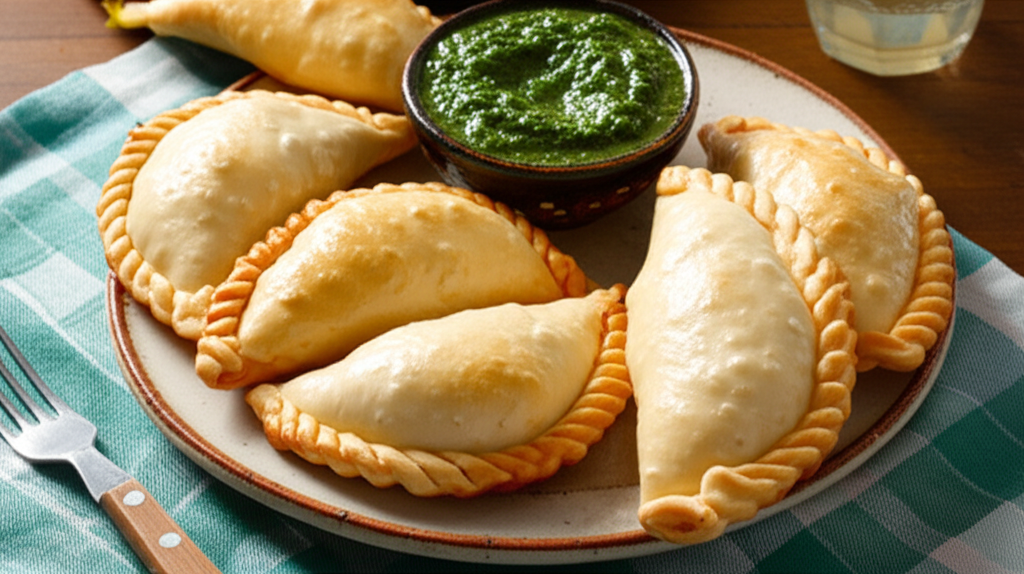
✨ Gaucho’s Gold: Crafting Authentic Argentine Beef Empanadas with a Vibrant Chimichurri Kiss
There are dishes that we cook, and then there are dishes that transport us. For me, the Beef Empanada is a vessel not just of savory filling, but of memory, of place, and of passion. My first true encounter with this culinary icon was not in a sterile kitchen, but on a sun-drenched cobblestone street in Buenos Aires’ La Boca neighborhood. The air, thick with the distant, melancholic notes of a tango melody and the tantalizing aroma of grilling meats, was a sensory tapestry. An elderly woman, her hands moving with the practiced grace of a lifetime, served me a single, golden-crescent empanada from a humble cart. The moment the flaky, buttery crust shattered between my teeth, revealing a deeply savory, steaming filling of spiced beef, olives, and egg, was nothing short of an epiphany. It was rustic, honest, and profoundly delicious. That simple pastry told a story of the vast Pampas, of the gauchos, and of the generations of families who have gathered to fold, fill, and share these pockets of joy. The experience is completed only by its lifelong partner: chimichurri. This electric, herbaceous sauce is the sharp, verdant counterpoint that cuts through the richness of the pastry, a bright flash of lightning in a warm, savory sky. To cook empanadas is to partake in a tradition, to create a moment of communal warmth. It’s a dish that demands you slow down, to work the dough with your hands, to carefully fold and seal each parcel with love. This recipe is my tribute to that memory, elevated with a wellness-focused sensibility but fiercely protective of its authentic soul.
🛒 Ingredients
- For the Empanada Dough (Masa):
- 3 cups (450g) all-purpose flour, plus more for dusting
- 1 teaspoon fine sea salt
- 1/2 cup (113g) cold, grass-fed unsalted butter, cut into 1/2-inch cubes
- 1 large egg, farm-fresh if possible
- 1/2 cup (120ml) filtered water, cold
- 1 tablespoon white vinegar (the secret to a tender crust)
- For the Beef Filling (Relleno):
- 1 tablespoon avocado oil or grass-fed ghee
- 1 large yellow onion, finely diced (about 1.5 cups)
- 1 red bell pepper, finely diced
- 3 cloves garlic, minced
- 1 lb (450g) lean ground grass-fed beef (85/15 is ideal for flavor)
- 1.5 teaspoons smoked sweet paprika
- 1 teaspoon ground cumin
- 1/2 teaspoon dried oregano
- 1/4 teaspoon cayenne pepper or red pepper flakes (adjust to your preference)
- 1/2 cup beef bone broth or dry red wine (Malbec is perfect)
- 1/2 cup chopped green olives (Spanish Manzanilla olives are classic)
- 2 large hard-boiled eggs, peeled and roughly chopped
- Sea salt and freshly ground black pepper to taste
- Gourmet Substitution: For a more luxurious, textural filling, hand-dice a pound of sirloin steak into tiny 1/4-inch cubes instead of using ground beef.
- For the Authentic Chimichurri Sauce:
- 1 cup packed fresh flat-leaf parsley, finely chopped
- 1/4 cup packed fresh oregano leaves, finely chopped
- 4-5 cloves of garlic, finely minced
- 1 small shallot, finely minced (optional, for a gentler onion flavor)
- 1/2 cup high-quality extra virgin olive oil
- 3 tablespoons red wine vinegar
- 1 teaspoon red pepper flakes
- 1 teaspoon flaky sea salt
- 1/2 teaspoon freshly ground black pepper
- For Assembly:
- 1 large egg, beaten with 1 tablespoon of milk (for the egg wash)
A Chef’s Note on Key Ingredients:
- Grass-Fed Butter & Beef: Choosing grass-fed animal products is not a matter of pretense; it is a commitment to superior flavor and a more beneficial nutritional profile. The butter lends a richer, nuttier flavor to the pastry, while the beef offers a cleaner, more complex taste and a healthier fat composition, rich in Omega-3s.
- Smoked Paprika (Pimentón Dulce Ahumado): This is the soul of many Spanish and Argentine dishes. Its purpose extends far beyond color. It imparts a deep, smoky essence that evokes the spirit of open-fire Asado cooking, adding a layer of sophisticated, rustic character to the filling that plain paprika simply cannot replicate.
- Red Wine Vinegar in Chimichurri: While any vinegar provides acidity, red wine vinegar brings a gentle fruitiness and a robust character that beautifully complements the red meat. It’s the backbone of the chimichurri, providing the bright, acidic ‘zing’ that cleanses the palate and balances the richness of the empanada.
👨🍳 Instructions
-
Step 1: Compose the Chimichurri Symphony & Prepare the Filling’s Foundation
We begin with the chimichurri, as its flavors need time to marry and mellow. This is an exercise in knife skills, not machine-work. A food processor will bruise the delicate herbs, resulting in a bitter, murky sauce. Finely chop your parsley, oregano, garlic, and shallot by hand. In a glass bowl, combine them. Create a well in the center and pour in the extra virgin olive oil and red wine vinegar. Add the red pepper flakes, salt, and pepper. Stir gently to combine. Do not over-mix. Cover and set aside at room temperature for at least an hour, allowing the oil to become deeply infused with the aromatics. For the filling’s foundation, gently hard-boil your eggs. The key to perfect, non-rubbery hard-boiled eggs is to place them in cold water, bring to a boil, then immediately turn off the heat, cover, and let sit for 10-12 minutes. Transfer to an ice bath to stop the cooking process. Once cool, peel and chop them. -
Step 2: Develop the Flavor Canvas – The Beef Relleno
In a large, heavy-bottomed skillet or Dutch oven, heat the avocado oil over medium heat. Add the finely diced onion and bell pepper. Sauté, stirring occasionally, for 8-10 minutes, until they are soft, translucent, and sweet—this is your sofrito, the flavor base. Add the minced garlic and cook for another minute until fragrant. Now, increase the heat to medium-high, add the ground beef, and break it up with a wooden spoon. The goal is to brown the meat, not steam it, so ensure the pan is hot. Cook until no pink remains. Drain off any excess fat. Stir in the smoked paprika, cumin, oregano, and cayenne pepper, cooking for one minute more to toast the spices and awaken their essential oils. Deglaze the pan with the beef broth or Malbec, scraping up any delicious browned bits (the fond) from the bottom. Let the liquid reduce almost completely. Remove from heat and let it cool for about 10 minutes before stirring in the chopped green olives and hard-boiled eggs. Season generously with salt and pepper. Crucial Chef’s Tip: You must chill the filling completely. Transfer it to a bowl, cover, and refrigerate for at least an hour, or even overnight. Attempting to fill empanadas with warm filling will melt the butter in your dough, destroying your chances of a flaky crust. Patience here is the key to perfection. -
Step 3: The Art of the Masa – Crafting and Assembling the Pastry
In a large mixing bowl, whisk together the flour and salt. Add the cold, cubed butter. Using a pastry cutter or your fingertips, cut the butter into the flour until the mixture resembles coarse breadcrumbs with some pea-sized butter pieces remaining. These pieces are essential; they will melt during baking, creating steam pockets and thus, a flaky texture. In a separate small bowl, whisk the egg, cold water, and vinegar. Pour this liquid mixture into the flour mixture and use a fork to gently bring it together into a shaggy dough. Turn it out onto a lightly floured surface and knead gently 2-3 times, just until it comes together. Do not overwork it. Form it into a disc, wrap it tightly in plastic wrap, and refrigerate for at least one hour. Once chilled, on a lightly floured surface, roll the dough out to about 1/8-inch thickness. Using a 5-inch round cutter (or the rim of a small bowl), cut out your discs. Spoon about 2-3 tablespoons of the chilled filling onto one half of each disc. Moisten the edge of the dough with a fingertip dipped in water. Fold the dough over to create a half-moon. Press the edges firmly to seal. Now, for the traditional seal, or repulgue: pinch and fold the edge over itself in a repeating pattern to create a beautiful, decorative rope. This not only looks professional but ensures a perfect seal. Place the assembled empanadas on a parchment-lined baking sheet and chill them in the refrigerator for 20-30 minutes to firm up before baking. This helps them hold their shape. -
Step 4: The Golden Transformation – Baking and Plating
Preheat your oven to 400°F (200°C). Arrange the chilled empanadas on the parchment-lined baking sheets. In a small bowl, whisk the egg and milk to create your egg wash. Lightly brush the tops of the empanadas with this wash; this will give them a gorgeous, glossy, golden-brown finish. Bake for 20-25 minutes, or until they are puffed and a deep golden brown. The sign of a well-made empanada is a few small cracks on the surface where steam has passionately escaped. Let them cool for 5-10 minutes before serving, as the filling will be incredibly hot. To serve, arrange the warm empanadas on a rustic wooden board or a warm platter. Serve the vibrant chimichurri alongside in a small dipping bowl, allowing guests to add as much of that zesty, herbaceous kick as they desire. A final, delicate sprinkle of flaky sea salt over the empanadas just before serving adds a final textural flourish.
🧪 Nutritional Analysis
Approximate values per empanada (assuming recipe yields 12 empanadas).
- Calories: ~380 kcal
- Protein: ~15g
- Carbohydrates: ~30g
- Fat: ~22g (significantly lower than fried versions)
- Fiber: ~2g
- Sugar: ~2g
- Sodium: ~450mg
- Dietary Fit: This recipe is a wonderful source of protein and wholesome fats. By baking instead of frying, we maintain a more health-conscious profile. For a gluten-free version, a high-quality, 1-to-1 gluten-free flour blend can be substituted for the all-purpose flour in the dough, though resting times may need adjustment.
💚 Health Benefits
- Energy & Muscle Support from Grass-Fed Beef: An exceptional source of high-quality, bioavailable protein essential for muscle repair and maintenance. It’s also rich in heme iron, which is crucial for oxygen transport and preventing fatigue.
- Heart Health with Monounsaturated Fats: The extra virgin olive oil in the chimichurri is packed with oleic acid, a monounsaturated fat celebrated for its ability to reduce inflammation and support cardiovascular health.
- Immune-Boosting Allium Vegetables: Garlic and onions are not just flavor agents; they contain powerful sulfur compounds like allicin, which possess potent antibacterial, antiviral, and immune-supporting properties.
- Antioxidant Powerhouse: From the lycopene in the bell peppers to the diverse flavonoids in parsley and oregano, this dish is rich in antioxidants that help combat oxidative stress and protect your cells from damage.
- Bone and Blood Health: Fresh parsley is an unsung hero, providing an excellent source of Vitamin K, which is vital for bone density and proper blood clotting.
- Digestive Wellness: The spices used, particularly cumin, have been traditionally used to aid digestion, while the fiber from the vegetables contributes to a healthy gut microbiome.
🌟 Final Thoughts from Chef Adam Jorive
In the culinary world, we often chase complexity, seeking out esoteric ingredients and elaborate techniques. Yet, sometimes, the most profound satisfaction comes from mastering a dish that is, at its heart, simple and honest. The empanada is a perfect testament to this truth. It is a canvas for your creativity. Do not feel bound by my exact recipe; feel inspired by it. Perhaps you’ll add a handful of sweet raisins to the filling for a classic salteña style, or maybe you’ll experiment with a different protein. The beauty of this dish lies in its adaptability and its ability to bring people together. Crafting these little parcels is a meditative act—a moment to connect with your food and the rich history it represents. My philosophy has always been to find the elegant balance between pure indulgence and mindful wellness. These baked empanadas, bursting with a savory, nutrient-dense filling and paired with a fresh, life-giving chimichurri, are the perfect embodiment of that principle. They nourish the body, yes, but more importantly, they nourish the soul. So, put on some music, pour a glass of Malbec, and enjoy the beautiful, delicious process.