
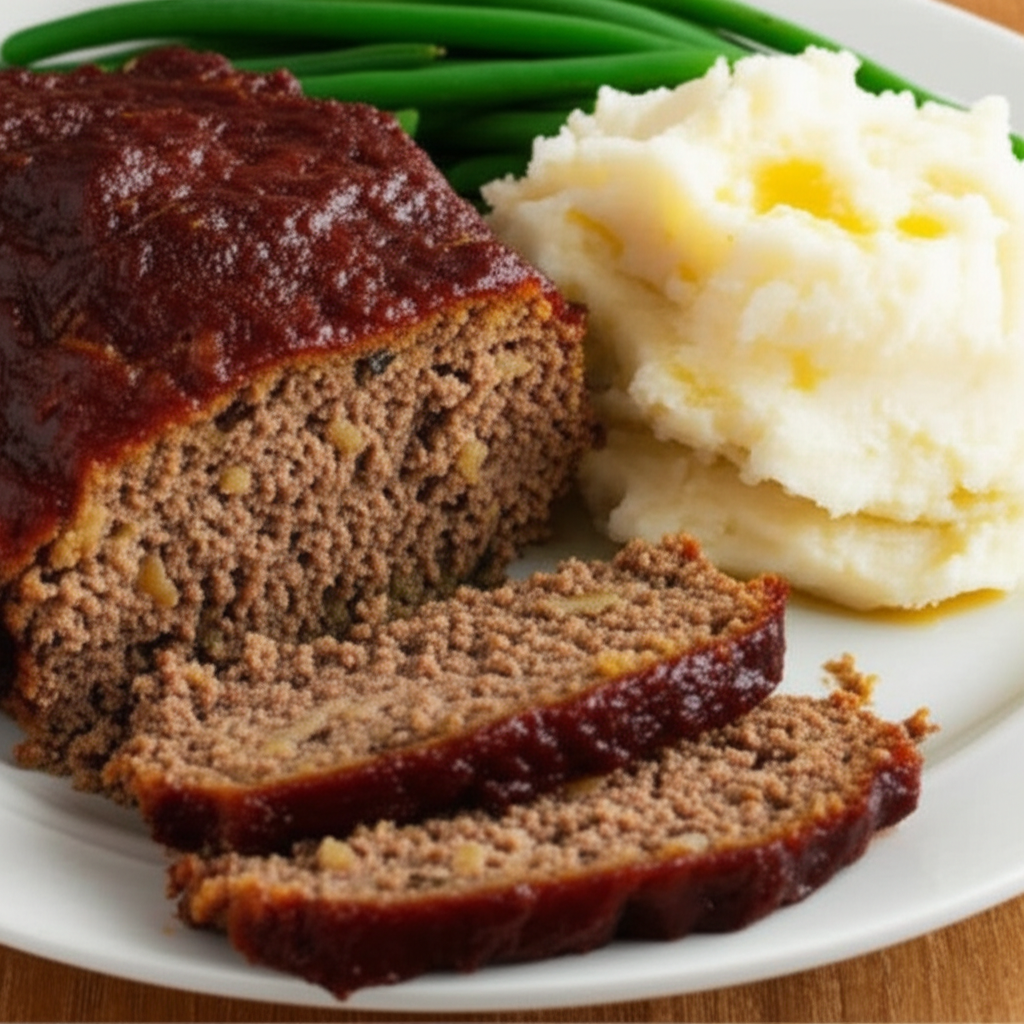
✨ The Hearth & Soul of America: A Reimagined Meatloaf Symphony
There exists a certain alchemy in the world of comfort food, a culinary magic that transcends mere sustenance to touch the very soul. For me, and for so many across the American culinary landscape, no dish embodies this more profoundly than meatloaf. It is a humble icon, a tapestry woven from threads of resourcefulness, family tradition, and the deep, resonant satisfaction of a meal made with love. I recall the scent from my earliest memories—not of a grand, Michelin-starred kitchen, but of a home filled with the rich, savory aroma of caramelized tomato glaze and slow-baking beef, a scent that promised warmth, safety, and a moment of shared peace. This wasn’t merely food; it was the culinary heartbeat of a household.
Historically, meatloaf was born from necessity, a brilliant Great Depression-era solution to extend precious protein with bread, grains, and vegetables. Yet, from these humble origins, it became a canvas for American creativity. Every family has their secret, their twist—a dash of spice, a specific vegetable, a unique glaze. It is this very adaptability that makes meatloaf an enduring classic. Today, as a chef deeply committed to wellness, I see it not as a relic of the past, but as a vessel for modern nourishment. We can honor its comforting essence while elevating it with superior ingredients and refined techniques. My interpretation transforms it from a dense, heavy loaf into a sophisticated, nutrient-rich centerpiece. Imagine a slice that is impossibly tender and moist within, yet boasts a gorgeously browned, umami-laden crust. The flavor profile is a symphony: the deep, earthy notes of grass-fed beef and wild mushrooms, the subtle sweetness of slow-cooked mirepoix, the bright, tangy whisper of a balsamic-tomato glaze, and the gentle herbaceous lift of fresh thyme. This is a meatloaf to be savored slowly, perhaps on a cool autumn evening, served not just as a meal, but as a culinary story of heritage, reimagined for a vibrant, healthful life.
🛒 Ingredients
- For the Meatloaf:
- 1 lb grass-fed ground beef (85/15 lean-to-fat ratio is ideal)
- 1/2 lb ground bison or pasture-raised ground pork (for complexity and tenderness)
- 1 cup panko breadcrumbs (Gourmet substitution: For a gluten-free and nutrient-dense option, use 3/4 cup almond flour or 1 cup of old-fashioned rolled oats, pulsed briefly in a food processor)
- 2/3 cup whole milk or unsweetened almond milk
- 1 large yellow onion, finely diced (a classic brunoise cut)
- 2 medium carrots, peeled and finely diced
- 2 celery stalks, finely diced
- 4 cloves garlic, minced
- 2 large pasture-raised eggs, lightly beaten
- 1/4 cup finely chopped fresh flat-leaf parsley
- 2 tablespoons Worcestershire sauce
- 1 tablespoon fresh thyme leaves, removed from stems
- 1 teaspoon smoked paprika
- 2 teaspoons fine sea salt
- 1 teaspoon freshly ground black pepper
- 1 tablespoon avocado oil or extra virgin olive oil
- Optional gourmet addition: 1 tablespoon of finely ground dried porcini mushroom powder for an incredible umami depth.
- For the Signature Glaze:
- 1/2 cup organic tomato paste
- 3 tablespoons balsamic vinegar
- 2 tablespoons coconut aminos or tamari
- 1 tablespoon maple syrup or honey
- 1 teaspoon Dijon mustard
A Note on Key Ingredients:
- Grass-Fed Beef & Bison Blend: The foundation of our meatloaf’s flavor and nutritional profile. Grass-fed beef offers a richer, more complex taste and a superior fatty acid profile, including more Omega-3s and Conjugated Linoleic Acid (CLA), than its grain-fed counterpart. Blending it with lean, slightly sweet bison adds a wonderful textural dimension and depth, preventing the loaf from becoming one-note.
- The Panade (Milk & Breadcrumbs): This is not filler; it is the secret to a tender, moist meatloaf. The breadcrumbs (or their substitute) absorb the milk, creating a starchy gel. During cooking, this gel traps moisture and fat within the meat mixture, preventing it from contracting into a tough, dry brick. It is a fundamental technique for any chef working with ground meat.
- Dried Porcini Powder: This is my secret weapon for elevating humble dishes. Dried porcini mushrooms are a powerhouse of natural umami. When ground into a powder, they dissolve into the meat mixture, an invisible layer of flavor that adds a deep, savory, and almost “meaty” richness that you can’t quite place but will absolutely adore. It transforms the dish from simply “good” to profoundly delicious.
👨🍳 Instructions
-
Step 1: Develop the Flavor Base (The Mirepoix)
The first step in building exceptional flavor is to properly cook your aromatics. In a large skillet over medium heat, warm the avocado oil. Add the finely diced onion, carrot, and celery (this classic French trio is called a mirepoix). Sauté gently for 8-10 minutes, stirring occasionally, until the vegetables are soft, translucent, and have released their natural sweetness. Do not rush this step; you are “sweating” the vegetables, not browning them. In the final minute of cooking, add the minced garlic and fresh thyme leaves and cook until fragrant, about 60 seconds. Remove the skillet from the heat and allow this aromatic base to cool completely. This cooling is critical; adding hot vegetables to raw meat can begin to cook the protein prematurely, resulting in a tough texture. -
Step 2: Create the Panade and Prepare the Mixture
While your mirepoix cools, prepare the panade. In a very large mixing bowl, combine the panko breadcrumbs (or your chosen substitute) and the milk. Stir gently and let it sit for 5-10 minutes. This allows the breadcrumbs to fully absorb the liquid, creating the moisture-locking gel we discussed. Once the mirepoix is cool to the touch, add it to the bowl with the panade. Then, add the beaten eggs, chopped parsley, Worcestershire sauce, smoked paprika, porcini powder (if using), sea salt, and black pepper. Mix these wet ingredients and aromatics together thoroughly before introducing the meat. -
Step 3: The Gentle Art of Mixing
Now, add the ground beef and ground bison (or pork) to the large bowl. This is the most crucial moment for texture control. The single biggest mistake in meatloaf making is overmixing. Overworking the proteins develops gluten-like strands, leading to a dense, rubbery final product. Use your hands—they are your best tools—and mix the meat with the other ingredients just until everything is combined. Think of it as gently folding rather than vigorously stirring. As soon as you no longer see large streaks of unmixed meat, stop. A light touch is the signature of a skilled chef here. -
Step 4: Shaping, Glazing, and Baking
Preheat your oven to 375°F (190°C). Line a rimmed baking sheet with parchment paper. Instead of a loaf pan, we will shape the meatloaf free-form. This master-stroke technique creates more surface area, which means more delicious, caramelized crust. Gently transfer the mixture to the parchment paper and shape it into a uniform, rectangular loaf about 9×5 inches. In a small bowl, whisk together all the glaze ingredients: tomato paste, balsamic vinegar, coconut aminos, maple syrup, and Dijon mustard. Brush half of this glaze evenly over the top and sides of the loaf. Bake for 30 minutes. Then, remove the meatloaf from the oven and brush the remaining glaze over it. Return it to the oven and bake for another 20-25 minutes, or until the internal temperature reaches 160°F (71°C) on an instant-read thermometer. -
Step 5: The Essential Rest and Plating
Once cooked, remove the meatloaf from the oven. Do not slice it immediately! This resting period is as important as the cooking itself. Let it rest on the baking sheet for at least 10-15 minutes. This allows the juices, which have migrated to the center during cooking, to redistribute throughout the loaf, ensuring every slice is succulent and flavorful. To serve, use a sharp serrated knife to cut thick, generous 1-inch slices. For an elegant presentation, place a slice slightly off-center on the plate, perhaps alongside a swirl of creamy parsnip purée or roasted Brussels sprouts, and garnish with a few fresh thyme sprigs. The contrast of the dark, glossy glaze against the tender interior is visually stunning.
🧪 Nutritional Analysis
- Calories per serving (approx. 1/6th of loaf): 420-460 kcal
- Protein: 32g
- Carbohydrates: 20g
- Fat: 22g
- Fiber: 4g
- Sugar: 9g
- Sodium: 850mg
- Dietary Notes: This recipe can be made gluten-free by using certified gluten-free oats or almond flour instead of panko. For a lower-carbohydrate version, omit the breadcrumbs entirely and substitute with an extra egg and 1/4 cup of grated Parmesan cheese as a binder, and use a sugar-free sweetener in the glaze.
💚 Health Benefits
- Sustained Energy & Muscle Support: The high-quality protein from the grass-fed beef and bison is crucial for building and repairing tissues, supporting lean muscle mass, and providing slow-release energy that avoids blood sugar spikes.
- Rich in Iron and Vitamin B12: Red meat, especially grass-fed, is one of the best dietary sources of heme iron, which is highly bioavailable and essential for preventing anemia and supporting oxygen transport. Vitamin B12 is vital for neurological function and DNA synthesis.
- Brain Health from Healthy Fats: Grass-fed beef contains a more favorable ratio of Omega-6 to Omega-3 fatty acids, which are known to support cognitive function and reduce inflammation. The pasture-raised eggs also contribute choline, a key nutrient for brain development and memory.
- Antioxidant Powerhouse: The mirepoix base of onion, carrot, and celery, along with garlic, provides a wealth of antioxidants like quercetin and beta-carotene. These compounds help combat oxidative stress and support cellular health.
- Immune System Support: Garlic contains allicin, a compound with well-documented antimicrobial and immune-boosting properties. The zinc found in the beef is also critical for a properly functioning immune system.
- Gut-Friendly Fiber: The vegetables and optional oat substitute provide dietary fiber, which is essential for digestive regularity and feeding the beneficial bacteria in your gut microbiome.
🌟 Final Thoughts from Chef Adam Jorive
In the end, cooking is an act of translation—translating memory into flavor, heritage into a modern meal, and nourishment into joy. This meatloaf recipe is my love letter to a quintessential American dish, a demonstration that wholesome, wellness-focused food can and should be deeply comforting and unapologetically delicious. Do not be afraid to make this recipe your own. It is a canvas, not a rigid doctrine. Perhaps you’ll add finely chopped bell peppers, a pinch of cayenne for warmth, or swap the thyme for rosemary. The beauty lies in the evolution. The goal is to find that perfect harmony on your own palate—the balance between honoring tradition and embracing a more mindful way of eating. Cook with intention, plate with beauty, and share with gratitude. That is the true essence of a meal that feeds not just the body, but the soul.