
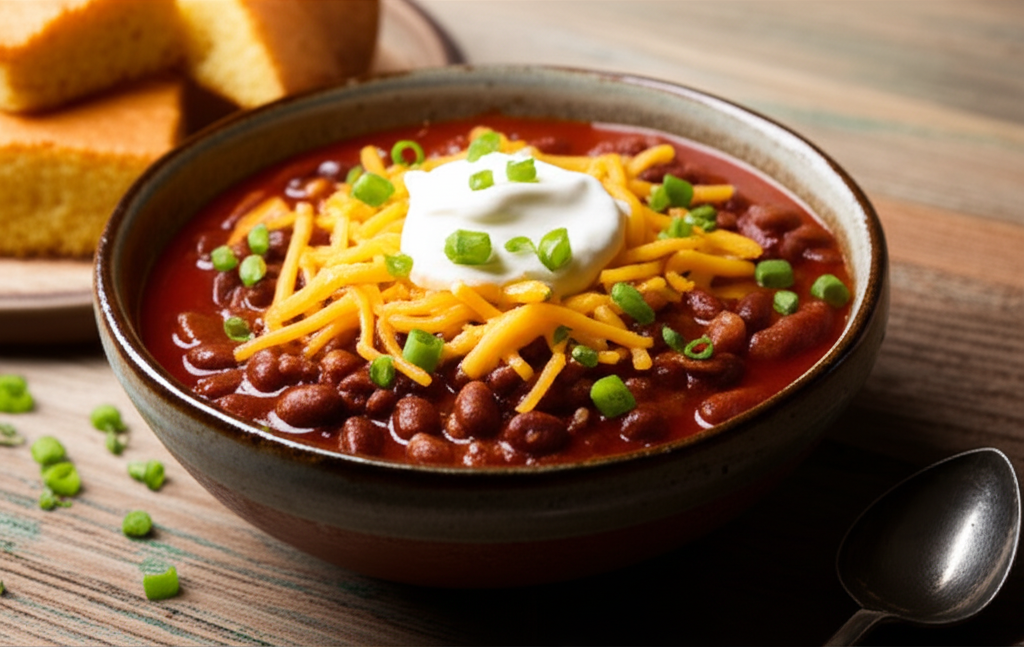
✨ The Connoisseur’s Chili: A Symphony of Smoke, Spice, and American Soul
There are certain dishes that are not merely recipes, but narratives woven into the very fabric of a culture. Chili, in its purest form, is one such American epic. Forget the hurried, one-note versions you may have encountered. I want to take you on a journey to the heart of what this dish can be: a profound, slow-simmered tapestry of flavor, a culinary meditation that warms you from the inside out. Its story begins not in a can, but on the sprawling, sun-drenched plains of the American Southwest, a rugged dish born of necessity and ingenuity. It was fuel for cowboys and pioneers, a pot of elemental comfort at the end of a long day. Today, we can elevate that rustic soul into something truly extraordinary without sacrificing its authenticity.
Imagine the aroma first. It doesn’t just hit you; it unfolds. A deep, resonant perfume of toasted chiles—smoky ancho, fruity guajillo, fiery de árbol—mingles with the earthy scent of cumin and oregano, the sweet fragrance of caramelized onions, and the rich, savory depth of slow-braised beef. This is not a dish to be rushed. It is an experience best savored on a cool evening, perhaps with a fire crackling nearby, shared among friends with robust conversation. Each spoonful should offer a complex dance on the palate: a gentle, building heat that awakens the senses but doesn’t overwhelm them, followed by layers of rich umami, a whisper of bitterness from dark chocolate, and a final, bright note of acidity. This is more than a meal; it’s a testament to the beauty of slow cooking, a celebration of humble ingredients transformed into culinary art, and a delicious homage to an American classic.
🛒 Ingredients
- For the Chile Purée:
- 4 dried Ancho chiles, stems and seeds removed
- 3 dried Guajillo chiles, stems and seeds removed
- 1-2 dried Chiles de Árbol, stems removed (adjust for desired heat)
- 2 cups hot, high-quality beef or vegetable broth
- For the Chili Base:
- 2 lbs grass-fed beef chuck roast, cut into ½-inch cubes
- 2 tablespoons avocado oil or ghee
- 1 large yellow onion, finely diced
- 4-5 cloves garlic, minced
- 1 jalapeño or serrano pepper, finely minced (optional, for extra heat)
- 1 (28-ounce) can San Marzano crushed tomatoes
- 1 (12-ounce) bottle of a dark, malty beer (like a stout or porter) or an additional 1.5 cups beef broth
- 2 tablespoons tomato paste
- 1 tablespoon ground cumin, preferably freshly toasted and ground
- 1 tablespoon dried Mexican oregano
- 1 teaspoon smoked paprika
- ½ teaspoon ground coriander
- 1 ounce unsweetened dark chocolate (70% cacao or higher) or 1 tablespoon unsweetened cacao powder
- 2 (15-ounce) cans of kidney or pinto beans, rinsed and drained (Optional Substitution: Use heirloom beans like Anasazi or black beans for a creamier texture and deeper flavor.)
- Sea salt and freshly cracked black pepper to taste
- 1 tablespoon apple cider vinegar or fresh lime juice, for finishing
- Key Ingredient Spotlight:
- Dried Chiles (Ancho, Guajillo): These are the soul of the dish. Moving beyond generic chili powder and using whole, rehydrated chiles provides a complexity that is simply unmatched. Ancho chiles offer smoky, raisin-like notes, while Guajillos contribute a bright, tangy, slightly sweet flavor. Toasting them awakens their essential oils, creating a deeply aromatic and layered foundation.
- Grass-Fed Beef Chuck: Choosing a well-marbled chuck roast and cubing it yourself, rather than using ground beef, is a transformative step. The slow braising process renders the fat and breaks down the connective tissues, resulting in incredibly tender, succulent bites of meat that melt in your mouth. Grass-fed beef also provides a superior flavor profile and a healthier fat composition, rich in Omega-3s.
- Unsweetened Dark Chocolate/Cacao: This is a classic technique borrowed from Mexican mole traditions. A small amount of high-cacao chocolate or powder doesn’t make the chili taste like dessert. Instead, it adds an incredible depth, a subtle bitterness that balances the sweetness of the tomatoes and the heat of the chiles, and contributes to a luxurious, velvety texture in the final sauce.
👨🍳 Instructions
-
Step 1: Awaken the Chiles & Prepare Your Mise en Place
Begin by preparing your chile purée, the heart of our flavor. Place a dry cast-iron skillet over medium heat. Working in batches, toast the de-stemmed and de-seeded Ancho, Guajillo, and de Árbol chiles for about 30-45 seconds per side until they become fragrant and slightly pliable. Be careful not to burn them, or they will turn bitter. Immediately transfer the toasted chiles to a bowl and cover them with the hot beef broth. Let them steep for at least 30 minutes to rehydrate and soften. Once softened, transfer the chiles and the soaking liquid to a high-speed blender and blend until completely smooth. Set this vibrant purée aside. Meanwhile, execute your “mise en place”: precisely cube your beef chuck, finely dice your onion, mince the garlic and jalapeño. A sharp chef’s knife is your best friend here; uniform cuts ensure even cooking. Season the beef cubes generously with salt and pepper. -
Step 2: Develop the Foundation – Searing and Sautéing
In a large Dutch oven or heavy-bottomed pot, heat the avocado oil over medium-high heat until it shimmers. Working in two or three batches to avoid overcrowding the pan, sear the beef cubes on all sides until a deep, brown crust forms. This Maillard reaction is crucial for developing profound, savory flavor. Do not rush this step. Use tongs to turn the pieces, ensuring every surface is browned. Transfer the seared beef to a separate bowl. Reduce the heat to medium, add the diced onion to the pot, and sauté for 5-7 minutes, scraping up the browned bits (the fond) from the bottom of the pot, until the onion is soft and translucent. Add the minced garlic and jalapeño, and cook for another minute until fragrant. -
Step 3: Blooming the Spices & Building the Symphony
Add the tomato paste to the pot with the onions and cook, stirring constantly, for 2 minutes. This caramelizes the paste and deepens its flavor. Now, add your ground spices: the cumin, Mexican oregano, smoked paprika, and coriander. Stir them into the onion mixture and let them “bloom” in the heat for about 60 seconds until they are intensely aromatic. This toasting process unlocks their volatile oils. Pour in the dark beer (or broth) to deglaze the pan, using a wooden spoon to scrape every last bit of flavor from the bottom. Let the liquid reduce by about half. -
Step 4: The Slow Simmer – Melding the Flavors
Return the seared beef and any accumulated juices to the pot. Pour in your beautifully smooth chile purée and the crushed San Marzano tomatoes. Add the piece of dark chocolate or cacao powder and stir everything together until the chocolate is melted and fully incorporated. Bring the mixture to a gentle simmer, then reduce the heat to low, cover the pot, and let it cook for at least 2.5 to 3 hours, or until the beef is fork-tender. Stir occasionally to prevent sticking. The goal is a low, gentle “blurp, blurp” simmer, not a rolling boil. During the last 30 minutes of cooking, stir in the rinsed beans (if using) to allow them to heat through and absorb the chili’s flavor without turning to mush. -
Step 5: Finishing, Balancing, and Plating
After the long simmer, taste the chili. It’s likely rich and deep, but it needs brightness. This is where a master chef’s touch comes in. Turn off the heat and stir in the apple cider vinegar or fresh lime juice. This touch of acid will awaken all the other flavors and cut through the richness. Adjust the seasoning with more salt and pepper as needed. To serve, ladle the chili into warmed bowls. Elevate the presentation with a thoughtful garnish: a dollop of cooling crème fraîche or full-fat Greek yogurt, a sprinkle of fresh cilantro, some thinly sliced radishes for a peppery crunch, and perhaps some crumbled cotija cheese or toasted pepitas. True elegance is found in these final details.
🧪 Nutritional Analysis
(Approximate values per serving, assuming the recipe makes 8 servings)
- Calories: ~480 kcal
- Protein: ~35g
- Carbohydrates: ~30g
- Fat: ~22g
- Fiber: ~9g
- Sugar: ~8g
- Sodium: ~650mg (can be lowered by using low-sodium broth and controlling added salt)
- Dietary Profile: This recipe is naturally gluten-free. For a low-carb or ketogenic version, simply omit the beans and ensure the beer used is very low-carb or substitute with broth. For a vegan adaptation, substitute the beef with a mix of mushrooms and lentils, and use a rich vegetable broth.
💚 Health Benefits
- Metabolic and Anti-inflammatory Support: The capsaicin found in all the chile peppers has been studied for its potential to modestly boost metabolism and its powerful anti-inflammatory properties, which can help soothe systemic inflammation.
- Rich in Antioxidants: The tomatoes are an excellent source of lycopene, while the dark chocolate provides flavanols. These potent antioxidants help combat oxidative stress and protect your cells from damage.
- Superior Fat Profile for Brain & Heart Health: By opting for grass-fed beef, you are consuming a higher ratio of anti-inflammatory Omega-3 fatty acids and Conjugated Linoleic Acid (CLA), both of which are linked to improved cardiovascular and cognitive function.
- Digestive Wellness and Blood Sugar Balance: The beans are a fantastic source of soluble fiber, which acts as a prebiotic to feed beneficial gut bacteria. This fiber also helps to slow digestion, promoting satiety and stabilizing blood sugar levels.
- Immune System Fortification: The alliums in this dish—garlic and onions—contain powerful sulfur compounds like allicin, which have demonstrated antimicrobial properties and can support a robust immune response.
- Mineral-Rich for Energy Production: Beef and beans provide a wealth of essential minerals, including iron, which is vital for oxygen transport and energy, and zinc, which is crucial for immune function and cellular repair.
🌟 Final Thoughts from Chef Adam Jorive
In my kitchen, I believe the most beautiful food resides at the intersection of pleasure, wellness, and artistry. This chili is a perfect embodiment of that philosophy. It is, at its core, a humble dish, but one that invites elevation and personal expression. See this recipe not as a rigid set of rules, but as a blueprint—a starting point for your own culinary exploration. Perhaps you’ll introduce a hint of cinnamon or a star anise pod for warmth. Maybe you’ll experiment with different types of dried chiles to create a unique flavor signature. The kitchen should be your studio, and ingredients your palette.
The true beauty of this dish is in the slow, meditative process. It’s the alchemy of turning simple, whole ingredients into something deeply complex and nourishing. It is proof that food designed for our well-being can, and should, be utterly decadent and satisfying. So, put on some music, pour yourself a glass of wine, and enjoy the journey of crafting this bowl of American soul. Share it with people you love, and savor the profound comfort that only a truly well-made meal can provide.