
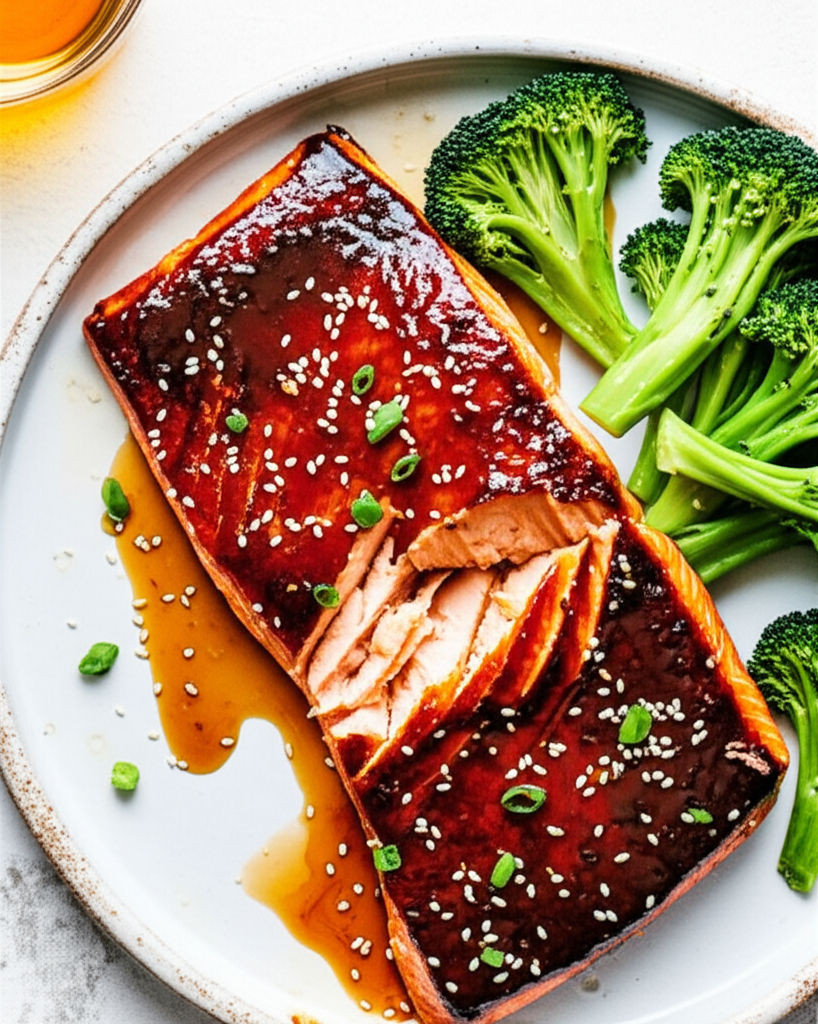
✨ The Art of Simplicity: A 5-Ingredient Miso-Glazed Salmon for the Modern Palate
There are moments in a chef’s journey that redefine the very essence of cooking. For me, one such moment wasn’t in the hallowed, bustling kitchens of Paris, but on a quiet, misty morning in Kyoto. I was visiting a small, family-run fermenter, a place where generations had perfected the art of miso. The air was thick with the earthy, profound scent of koji and soybeans, a smell that spoke of time, patience, and transformation. It was there I understood that true luxury in food isn’t about complexity or a litany of ingredients; it’s about purity and depth. This Miso-Glazed Salmon is a direct homage to that profound realization. It is a dish born from the philosophy of shibui—a Japanese concept of simple, subtle, and unobtrusive beauty.
Imagine returning home after a long day, the evening light casting long shadows in your kitchen. You seek not a culinary project, but a moment of restorative grace. This is the dish for that moment. With just five core components, we orchestrate a symphony of flavors that feels both ancient and incredibly modern. The salmon, a jewel from the cold, pristine waters, becomes our canvas. The miso glaze is our medium—a savory, umami-rich embrace that kisses the fish with a deep, soulful sweetness. As it broils, the glaze caramelizes into a glossy, lacquered crust, its aroma filling the air with notes of toasted nuts and sweet soy. The first bite is a revelation: the delicate, flaky salmon melts on your tongue, its richness perfectly cut by the salty, fermented tang of the miso. This isn’t just dinner; it’s a ritual of wellness, a testament to the idea that the most nourishing meals are often the most elegantly simple. It’s a dish best savored in quiet contemplation, perhaps with a simple bowl of steamed rice and some crisp, blanched asparagus—a complete portrait of refined tranquility.
🛒 Ingredients
- Salmon Fillets: 2 (6-ounce / 170g) fillets, skin-on or off, preferably wild-caught Coho or Sockeye for its rich flavor and firm texture. Ensure they are of a similar thickness for even cooking.
- White Miso Paste (Shiro Miso): 3 tablespoons. This is the cornerstone of our glaze.
- Mirin: 2 tablespoons. A sweet Japanese rice wine that provides balance and a beautiful sheen.
- Rice Vinegar: 1 tablespoon. For a touch of acidity to cut through the richness.
- Reduced-Sodium Soy Sauce or Tamari: 1 tablespoon. To deepen the umami and add seasoning. Use tamari for a gluten-free preparation.
- Chef’s Pantry (Optional Enhancements):
- 1 teaspoon freshly grated ginger, for a warm, zesty note.
- Toasted white and black sesame seeds, for garnish and a nutty crunch.
- Finely sliced scallions (the green parts only), for a fresh, delicate oniony finish.
- A tiny dash of sesame oil in the glaze for added aromatic depth.
A Word on Our Key Ingredients:
White Miso (Shiro Miso): Miso is a masterpiece of fermentation, a paste made from soybeans, salt, and a fungus called kōji. Shiro Miso, or white miso, is fermented for a shorter period, resulting in a lighter, sweeter, and more delicate flavor profile than its red counterpart. It’s the perfect choice here as it complements the salmon without overpowering its natural taste. Nutritionally, it’s a source of probiotics, which are instrumental for a healthy gut microbiome. It’s the very soul of our glaze, providing that inexplicable, deeply satisfying ‘fifth taste’—umami.
Mirin: More than just a sweetener, mirin is a culinary architect. This sweet rice wine contains a complex sugar profile and a low alcohol content that, when heated, creates a brilliant, glossy lacquer. It is the secret behind the beautiful caramelization and glistening finish on so many iconic Japanese dishes. In our glaze, it balances the saltiness of the miso and soy sauce, creating a harmonious and utterly addictive flavor. For the best results, seek out hon-mirin (true mirin) rather than mirin-style seasonings, which often contain corn syrup.
👨🍳 Instructions
-
Step 1: The Preparation Ritual
The journey to a perfect, crispy-skinned salmon begins not with heat, but with preparation. Remove your salmon fillets from the refrigerator about 20 minutes before cooking to allow them to come to room temperature; this promotes even cooking from edge to center. Using a paper towel, pat the fillets until they are impeccably dry on all surfaces. This step is non-negotiable. Moisture is the enemy of a crisp sear and a well-adhered glaze. If your fillets have skin, you may lightly score it with the tip of a sharp knife, making shallow, diagonal cuts. This prevents the skin from curling and allows for better heat penetration. -
Step 2: Composing the Umami Glaze
In a small bowl, we will conduct our culinary alchemy. Combine the white miso paste, mirin, rice vinegar, and soy sauce (or tamari). If using, add your grated ginger now. Whisk vigorously until the mixture is completely smooth and emulsified. The consistency should be that of thick honey—able to coat the back of a spoon without being runny. If it feels too thick, a half-teaspoon of warm water can be whisked in to achieve the perfect viscosity. Taste the glaze. It should be a potent dance of salty, sweet, and tangy. This is your flavor foundation. Set it aside for a moment to allow the flavors to marry. -
Step 3: Marination and Infusion
Place the salmon fillets in a shallow dish. Spoon about two-thirds of the prepared miso glaze over the flesh side of the salmon, using a brush or the back of the spoon to spread it into an even, generous layer. Reserve the remaining one-third of the glaze for later. Allow the salmon to marinate for at least 15 minutes at room temperature. For a deeper flavor infusion, you can marinate it in the refrigerator for up to an hour. However, be mindful that miso is high in salt and enzymes, which will begin to ‘cook’ or cure the fish if left for too long, altering its delicate texture. For a weeknight dinner, 15-20 minutes is the sweet spot. -
Step 4: The Perfect Sear and Broil
The secret to restaurant-quality salmon lies in a two-stage cooking process. Preheat your broiler to high and position an oven rack about 6 inches from the heat source. Heat a large, oven-safe skillet (cast iron is ideal) over medium-high heat. Add a whisper of a neutral, high-smoke-point oil, like avocado or grapeseed oil. Gently place the salmon fillets, skin-side down, into the hot pan. You should hear an immediate, confident sizzle. Sear for 2-3 minutes, undisturbed, until the skin is golden brown and releases easily from the pan. Now, brush the reserved glaze over the top of the fillets. Immediately transfer the entire skillet to the preheated broiler. Broil for 4-6 minutes, watching it like a hawk. The glaze will bubble, caramelize, and develop beautiful dark spots. The fish is done when it flakes easily with a fork, or an instant-read thermometer inserted into the thickest part registers 125-130°F (52-54°C) for medium-rare. -
Step 5: Resting and Plating
Remove the skillet from the oven with care. Let the salmon rest in the pan for 2-3 minutes. This crucial step allows the juices to redistribute throughout the fillet, ensuring a moist and tender result. To plate, use a thin fish spatula to lift a fillet onto a warm plate. Garnish with a sprinkle of toasted sesame seeds and freshly sliced scallions. This final touch adds texture, color, and a layer of fresh, aromatic complexity. Serve immediately, perhaps alongside steamed jasmine rice and tender-crisp green beans, to create a meal that is a masterpiece of balance and elegance.
🧪 Nutritional Analysis
(Approximate values per 6-ounce serving, may vary based on specific ingredients)
- Calories: ~390 kcal
- Protein: ~35g
- Fat: ~24g (primarily unsaturated)
- Carbohydrates: ~8g
- Fiber: ~1g
- Sugar: ~6g (from mirin)
- Sodium: ~580mg (using reduced-sodium soy sauce)
- Dietary Profile: This recipe is naturally high-protein, low-carb, and can be made fully gluten-free by using tamari instead of soy sauce.
💚 Health Benefits
- Supports Brain and Heart Health: Salmon is a powerhouse of omega-3 fatty acids, particularly EPA and DHA. These essential fats are celebrated for their role in reducing inflammation, lowering blood pressure, and supporting cognitive function and long-term brain health.
- Promotes Gut Harmony: The star ingredient, unpasteurized miso, is a fermented food rich in probiotics like Aspergillus oryzae. These beneficial bacteria contribute to a healthy gut microbiome, which is linked to improved digestion, a stronger immune system, and even better mental well-being.
- Rich in High-Quality Protein: Each serving provides a significant amount of complete protein, essential for muscle repair, maintaining metabolic rate, and ensuring a feeling of satiety, which can aid in weight management.
- Bone and Immune Support: Salmon is one of the few natural food sources of Vitamin D, a crucial nutrient for calcium absorption and bone health. It also contains selenium, a powerful antioxidant mineral that plays a key role in protecting the body from oxidative stress and supporting immune function.
- A Source of B Vitamins: This dish delivers a suite of B vitamins (including B12, B6, niacin, and riboflavin) from the salmon. These vitamins are vital enzymatic co-factors, helping your body convert the food you eat into usable energy, keeping you vibrant and focused.
- Anti-Inflammatory Properties: Beyond the omega-3s in salmon, the optional addition of fresh ginger provides gingerol, a compound with potent anti-inflammatory and antioxidant effects, further enhancing the wellness profile of this elegant meal.
🌟 Final Thoughts from Chef Adam Jorive
In our relentless pursuit of more—more ingredients, more steps, more complexity—we sometimes forget the profound elegance of less. This Miso-Glazed Salmon is a testament to the art of subtraction. It is proof that a meal of breathtaking flavor and immense nutritional value can be born from just a handful of thoughtfully chosen ingredients. Cooking, in its purest form, should be an act of joy, not a chore. It is a dialogue between you and your ingredients, a moment of creative expression that nourishes both body and soul.
I encourage you to embrace this recipe not as a rigid set of rules, but as a starting point for your own culinary story. Perhaps you’ll introduce a hint of yuzu for a brighter citrus note, or serve it over a bed of soba noodles tossed in sesame oil. Your kitchen is your studio, and your palate is your guide. Find the harmony between what is delicious, what is beautiful, and what makes you feel truly well. Because ultimately, the greatest dishes are not those that simply fill our stomachs, but those that leave a lasting impression on our hearts, reminding us of the simple, beautiful pleasures of a life well-lived.